

Code Orange Hospital: Behind the Scenes of a Medical Emergency
Hearing a code orange hospital announcement over the overhead speakers can instantly shift the atmosphere of an entire medical facility from routine predictability to absolute high-alert efficiency. If you happen to be visiting a loved one or waiting for a minor appointment, the sudden change in pace—doctors jogging down corridors, nurses mobilizing crash carts, administrators locking down specific wards—can feel genuinely overwhelming. I remember sitting in a busy Kyiv clinic back in late 2022 when a sudden mass influx of patients arrived from a nearby incident. Though the local terminology might have differed slightly from the standard North American color system, the essence of that mass casualty response was identical to a code orange. You witness firsthand a stunning display of human coordination where every single professional instantly knows their exact role. The sheer velocity of the response is staggering. The thesis is simple: understanding the mechanics behind these emergency protocols demystifies the chaos, proving that what looks like panic is actually a highly choreographed, intensely practiced system designed to save as many lives as humanly possible.
The Core Mechanics: Responding to Mass Casualties
When the intercom blares with a code orange alert, the facility is effectively declaring that an external disaster or mass casualty incident (MCI) has occurred, and a surge of patients is en route. The sheer logistics of receiving dozens, or perhaps hundreds, of patients simultaneously require a dramatic operational pivot. You might think the emergency room simply works faster, but the reality is a complete restructuring of the facility’s resources.
Breaking Down Hospital Emergency Codes
To give you a clear picture of how these alerts stack up against one another, look at this quick reference guide detailing standard emergency notifications:
| Code Color | Meaning of the Alert | Immediate Action Required by Staff |
|---|---|---|
| Code Orange | External Mass Casualty Incident | Activate disaster plans, set up triage zones, clear ER beds. |
| Code Red | Fire or Smoke Detection | Close fire doors, prepare for localized evacuation, grab extinguishers. |
| Code Blue | Medical Emergency (Cardiac Arrest) | Resuscitation team rushes to the specific patient room immediately. |
The true value proposition of the code orange system is its ability to instantly bypass bureaucratic bottlenecks. Instead of waiting for individual approvals to call in extra staff or cancel elective procedures, the code triggers automatic administrative overrides. Two classic examples illustrate this perfectly. First, imagine a massive multi-vehicle pile-up on a major interstate. The local trauma center knows they will receive twenty critical patients within the hour. The code orange initiates a clearing of the ER, pushing stable patients to upper floors. Second, picture an industrial chemical spill in a manufacturing district. The alert tells the hospital not just to prepare for high volumes, but also to set up decontamination tents outside the main entrance to prevent the chemicals from entering the sterile facility.
What Happens the Moment the Code is Called?
The immediate aftermath of the announcement involves a rapid, synchronized sequence of events. The staff doesn’t panic; they follow a rigid playbook.
- Triage Stations are Erected: Medical teams set up primary evaluation zones, often outside the main ER doors, to sort incoming patients based on the severity of their injuries.
- Non-Critical Operations Halts: Surgeons and anesthesiologists pause elective, non-emergency surgeries, freeing up operating rooms and critical care beds for incoming trauma victims.
- Personnel Surges: Off-duty nurses, doctors, and support staff receive automated pages or texts, instructing them to report to their designated incident command posts immediately.
- Resource Reallocation: Supply chain managers unlock reserve stores of bandages, IV fluids, and blood products, rushing them directly to the trauma bays.
The Origins and History of Emergency Protocols
Origins in Early Crisis Management
The concept of categorizing emergencies via brief, easily understood signals dates back long before the modern hospital environment. In the mid-20th century, particularly in the post-WWII era, hospitals recognized the desperate need for a way to communicate localized emergencies to staff without inciting panic among the general patient population. Shouting “Massive bus crash, everyone get ready!” over an intercom would cause unnecessary distress and chaos among recovering patients and their families. Early facilities began experimenting with numbered codes, chimes, or specific phrases. However, as medical professionals became more mobile and frequently moved between different facilities, the lack of standardization became a massive liability. A doctor accustomed to one system might completely misinterpret a vital alarm at a new workplace.
Evolution of the Color-Coded System
By the 1980s and 1990s, hospital associations across North America and Europe began heavily pushing for standardized color codes. The logic was brilliant in its simplicity. Colors cross language barriers and are universally recognized. Red naturally aligned with fire, blue with a lack of oxygen (cardiac arrest), and orange—a bright, universally alarming hazard color—became the standard for external disasters and mass casualties. This standardization meant that a traveling nurse or a newly hired physician didn’t have to memorize a complex, localized playbook just to know when the facility was facing a crisis. They heard the color, and their training kicked in automatically.
The Modern State of Disaster Response
As we navigate through the year 2026, the traditional overhead paging system is merely a backup. Today’s modern state of response relies heavily on interconnected, smart hospital environments. When an external disaster occurs, regional dispatchers interface directly with hospital management software. The code orange triggers silent alarms on the smartwatches of relevant personnel. AI-driven logistics platforms instantly calculate which beds can be cleared, track the GPS locations of available crash carts, and predict blood supply shortages based on the nature of the incoming incident. We have moved from simple intercom shouts to deeply integrated digital ecosystems, but the underlying philosophy remains identical: rapid, organized, and decisive action.
The Scientific and Technical Deep Dive
The Science of Triage Algorithms
At the heart of any mass casualty response is the brutal, highly calculated science of triage. When a facility is overwhelmed, the standard medical philosophy of treating the most severely injured person first must drastically shift. Medical teams employ algorithms like START (Simple Triage and Rapid Treatment). This system removes emotion from the equation, relying purely on physiological metrics—respiration rate, perfusion, and mental status. The goal shifts from saving every individual to doing the greatest good for the greatest number of people. It is a psychological burden for medical staff, but mathematically and scientifically, it is the only viable way to manage an extreme resource deficit. If a patient is injured beyond the immediate capability of the available resources, they are tagged expectantly so that doctors can focus on those with a higher statistical probability of survival.
Surge Capacity and Resource Logistics
Surge capacity isn’t just an abstract buzzword; it is a measurable, scientific metric that hospital administrators track relentlessly. It represents the absolute maximum limit a facility can stretch its physical space, personnel, and supplies. To understand the gravity of the situation, look at the precise metrics and facts medical researchers focus on during these crises:
- The Golden Hour Principle: Trauma science dictates that severe injury patients have a significantly higher survival rate if they reach the operating table within sixty minutes of the incident. The entire code orange workflow is optimized purely to shave minutes off this critical window.
- Bed Turnover Velocity: Administrators measure the exact time it takes to move a stable patient from the ER to a standard ward, aiming to reduce this transit time from hours to mere minutes during an active alert.
- Cognitive Load Management: Emergency physicians operate under massive psychological stress. Protocols are designed strictly to reduce decision fatigue, offering clear, binary choices so doctors don’t freeze under pressure.
- Supply Chain Elasticity: Hospitals maintain “disaster caches”—sealed pallets of emergency supplies that are rotated out periodically, ensuring that a sudden influx doesn’t instantly drain the daily operational inventory.
Actionable Plan: Managing a Code Orange Event
If you are looking at hospital administration or just deeply curious about the granular, step-by-step reality of managing these events, here is exactly how a medical facility tackles the situation from minute zero to the final stand-down. This is a rigorous, chronological playbook.
Step 1: Establishing the Incident Command Center
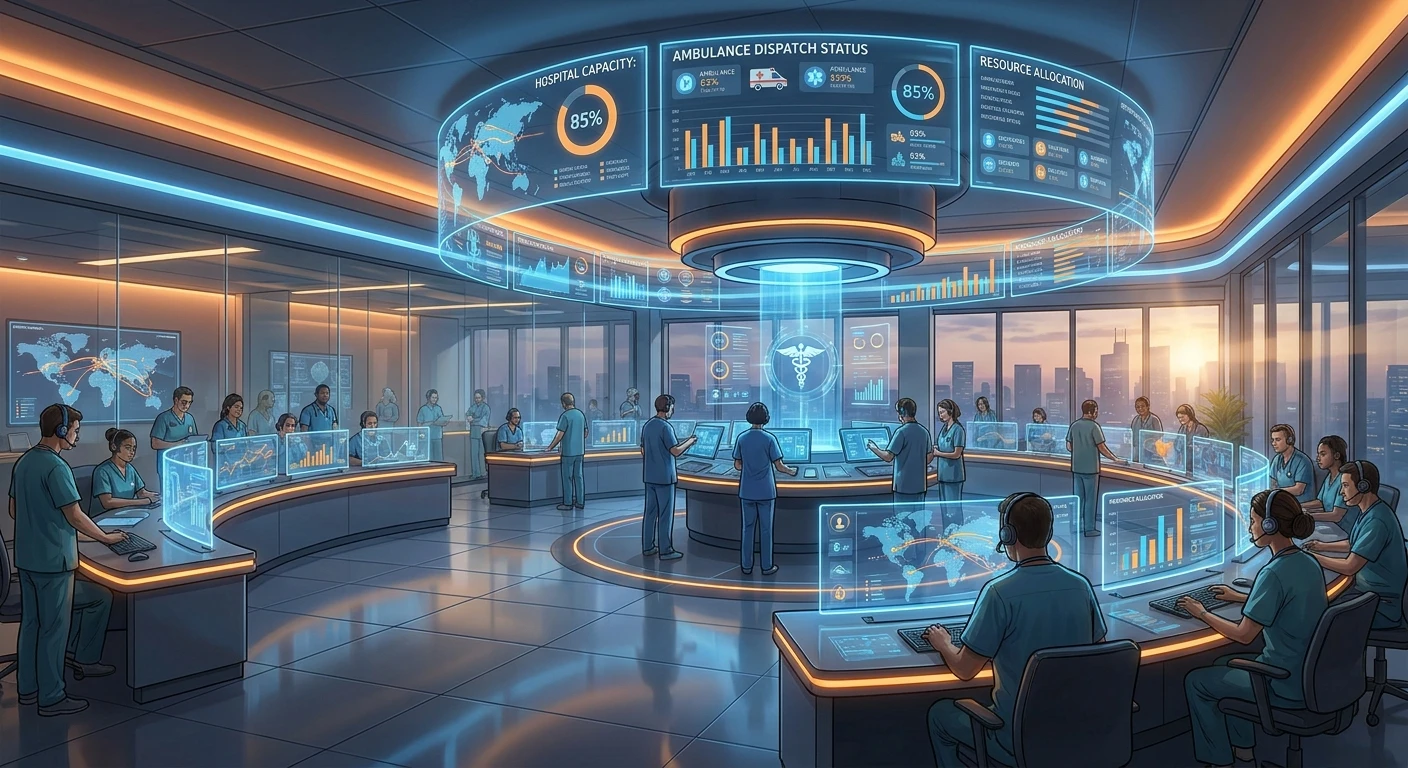
The absolute first priority is establishing a central hub of authority. The hospital’s designated incident commander—usually a senior administrator or the chief of emergency medicine—sets up operations in a secure room. They pull up real-time dashboards showing bed capacity, staff on site, and incoming ambulance ETAs. All major decisions flow exclusively through this hub to prevent overlapping, conflicting orders.
Step 2: Rapid Triage Deployment
While the command center boots up, charge nurses deploy to the ambulance bays. They physically set up the triage zones, unrolling colored tarps (Green, Yellow, Red, Black) that correspond to the severity of incoming patients. This physical space acts as a funnel, ensuring that minor injuries don’t clog up the trauma bays reserved for critical surgical interventions.
Step 3: Discharging Stable Patients
To make room, the hospital must undergo a rapid, aggressive discharge protocol. Physicians on the standard wards evaluate every single patient. Anyone who is medically stable and can recover safely at home is processed for immediate discharge. Their beds are stripped, cleaned, and prepped for the incoming wave.
Step 4: Mobilizing the Trauma Teams
Surgeons, anesthesiologists, and specialized scrub nurses are pulled from their regular duties. If they were scheduled to perform a routine gallbladder removal, that procedure is scrapped. They gather in the primary trauma bays, donning heavy protective gear and preparing specialized surgical trays tailored to the specific nature of the disaster (e.g., burn kits for a fire, trauma kits for a crash).
Step 5: Securing the Perimeter and Facility
Security teams play a massive, often unsung role. They immediately lock down all secondary entrances to the hospital. This prevents an influx of frantic family members or curious onlookers from flooding the hallways and blocking gurneys. Security establishes a single point of entry for patients and a designated waiting area for families to receive updates.
Step 6: Managing Communications and Media
A mass casualty incident attracts local news and frantic social media speculation. The hospital’s public relations team steps in to act as a buffer. They set up a media staging area completely off-site or in a distant wing, issuing controlled, accurate press briefings. This protects patient privacy and ensures the clinical staff isn’t harassed by reporters seeking a scoop.
Step 7: Stand-down and Debriefing Phase
Once the final patient is stabilized and the influx halts, the incident commander calls a stand-down. The code orange is officially cleared. But the work isn’t over. Teams must meticulously document everything that occurred, restock the massive amount of depleted supplies, and crucially, participate in psychological debriefings to process the trauma they just managed.
Myths and Reality of Hospital Alerts
There are countless misconceptions regarding what happens when emergency alarms ring out, mostly fueled by overly dramatic television shows. Let’s clear up the confusion.
Myth: A code orange means the hospital itself is on fire or under attack.
Reality: That scenario usually triggers a completely different alert, like a code red for fire or a code silver for an active threat. Orange specifically refers to an external disaster sending patients inward.
Myth: If an alert is called, current patients are kicked out to the street immediately.
Reality: Discharges are accelerated, but no one is sent home unless an attending physician absolutely guarantees they are medically stable and safe to leave.
Myth: Every single doctor drops what they are doing and runs to the emergency room.
Reality: That would cause sheer chaos. Deployments are highly structured. An oncologist, for instance, might be instructed to stay exactly where they are to manage current ward patients, leaving the ER to trauma specialists.
Myth: These protocols are identical in every single country.
Reality: While the foundational concept of mass casualty response is universal, the specific colors and terminologies vary. Some regions use plain-language alerts instead of colors to reduce confusion.
Frequently Asked Questions
What triggers a code orange?
It is triggered by external mass casualty events like major traffic accidents, train derailments, industrial explosions, or natural disasters that result in a high volume of injuries.
Can I visit a patient during a code orange?
No. Hospitals will immediately lock down the facility to non-essential personnel to keep hallways clear for rapid patient transport and medical interventions.
Does code orange mean biohazard?
Not necessarily. While a chemical or biological spill could trigger the alert, there are usually specific codes (like code brown) reserved strictly for hazardous material spills.
Who is in charge during the event?
The Incident Commander, typically a senior physician or high-ranking hospital administrator, assumes absolute control over facility operations during the emergency.
Are normal surgeries still performed?
Emergency life-saving surgeries continue, but all elective, non-urgent procedures are immediately canceled to free up operating room staff and space.
How long does a code orange last?
It lasts as long as it takes to receive, triage, and stabilize the surge of incoming patients. This can range from a few intense hours to an entire grueling day.
What should current patients do?
Current patients should remain exactly where they are, stay in their rooms, and follow the instructions of the floor nurses. Staying out of the way is the most helpful action.
Conclusion
Understanding a code orange hospital protocol reveals the incredible, hidden infrastructure of our medical systems. It isn’t just panic and flashing lights; it is a masterclass in logistics, human endurance, and rapid scientific triage. The next time you hear those overhead bells, you’ll know exactly the kind of organized heroism happening behind those closed double doors. Stay informed, share this knowledge with your community, and always respect facility lockdowns during an emergency.