
Discovering the Best Things to do in Ottawa
When you start searching for things to do in ottawa, you quickly realize this city is way more than just government buildings and sleepy weekend streets. I remember my first trip there clearly. Coming from the bustling energy of Kyiv, I fully expected Canada’s capital to feel like a stiff, formal administrative center. Instead, I found myself eating a wildly sweet beaver tail pastry right by the Rideau Canal, chatting with locals who carried that same warm, welcoming vibe you get walking down Khreshchatyk on a breezy summer evening. The connection felt instant, and the city totally surprised me.
Ottawa brilliantly blends rugged outdoor nature, deep historical roots, and a weirdly awesome, diverse food scene into one easily walkable package. Whether you are hunting for late-night pub crawls, peaceful river walks, or massive cultural festivals, the Canadian capital consistently delivers. I am writing this to give you the real breakdown—no filler, just exactly what you need to build the perfect itinerary. You want to know exactly where to spend your precious time, how to dodge the overpriced tourist traps, and what makes the city tick right now. Think of this as your local friend handing you the ultimate cheat sheet to the city.
Let me break down why picking the right activities matters so much. If you just wander around aimlessly, you will probably end up staring at Parliament Hill for three hours, grab a generic coffee, and completely miss the vibrant, quirky neighborhoods sitting right around the corner. The real magic happens when you balance the iconic landmark sites with authentic local hangouts.
The sheer variety of experiences means you can perfectly curate your trip based exactly on your personal vibe and energy levels. For instance, if you absolutely love the outdoors, Gatineau Park offers hundreds of kilometers of pristine hiking trails just a quick ten-minute drive from downtown. If you are an unapologetic foodie, the historic ByWard Market is packed tightly with vendors selling artisan cheeses, dark maple syrup, and fresh local produce.
Here is a quick reference table to help you categorize your daily options:
| Vibe / Interest | Top Location | Expected Cost |
|---|---|---|
| Outdoor Adventure | Rideau Canal & Gatineau Park | Free to Low |
| Food & Nightlife | ByWard Market & Elgin Street | Medium to High |
| Culture & History | National Gallery of Canada | Medium |
| Family Fun | Canadian Museum of Nature | Low to Medium |
To really nail your itinerary and avoid burnout, keep a few core principles in mind. Here is exactly how you should plan your days out on the town:
- Mix indoor and outdoor activities. The Canadian weather can shift fast, so smartly pair a morning museum visit with an afternoon park stroll.
- Stay central but explore the edges. Downtown is undeniably great, but neighborhoods like the Glebe or Westboro hold the absolute best coffee shops and independent boutique stores.
- Book your tickets in advance. Especially now in 2026, the highly popular spots fill up weeks ahead of time. Don’t risk missing out at the door because you waited too long.
- Follow the local event calendar. From winter ice carving festivals to massive summer music fests, there is always something temporary and amazing happening in the streets.
Understanding the basic layout of the city gives you a massive advantage. You will spend way less time sitting in transit and much more time actually enjoying the experience.
Origins of the Capital’s Tourism
Ottawa absolutely did not start out as a polished tourist hotspot. Originally a rough-and-tumble lumber town called Bytown, it was filled to the brim with rugged loggers, opportunistic traders, and a whole lot of mud. Queen Victoria famously picked it as the capital because it was safely distanced from the American border and sat right on the cultural fault line between the French and English populations of Canada. Back then, visitors only came for intense political business or the lucrative timber trade. Nobody was looking for leisure activities, fine dining, or sightseeing along the riverbanks.
Evolution of the City’s Attractions
Over the decades, the city intentionally shifted its rough image. The government realized a global capital needed to reflect the pride and sophistication of a massive nation. They aggressively built massive national museums, paved stunningly scenic parkways along the Ottawa River, and transformed the Rideau Canal from an obsolete military supply route into an absolute recreational playground for the public. By the late 20th century, international tourists started arriving specifically to see the massive tulip displays in spring and to literally skate on the frozen canal in the dead of winter. The food scene also shifted rapidly from basic diners to diverse, multicultural kitchens representing the wave of immigrants who made the city their home.
The Modern State of Ottawa Travel
Today, Ottawa operates as a highly sophisticated, well-oiled travel destination. The brilliant blend of high-end galleries and rugged outdoor spaces makes it incredibly unique on the global stage. You can literally tour a massive Cold War bunker in the morning and eat a delicate five-star tasting menu by sunset. The city planners have heavily invested in green transit and massive pedestrian zones, making it easier than ever to hop seamlessly between neighborhoods. The focus now is completely on sustainable tourism, celebrating deep indigenous heritage, and offering highly interactive, immersive experiences rather than just static, boring museum displays.
The Engineering Behind the Rideau Canal
You cannot talk about visiting this city without mentioning the Rideau Canal, but very few people actually realize the sheer engineering brilliance operating behind it. Constructed in the early 19th century, this artificial waterway stretches an impressive 202 kilometers. The technical challenge was massive: engineers had to create a specific slackwater system, building elaborate dams to raise natural water levels to navigable depths rather than digging a massive continuous trench. This brilliantly minimized excavation in the incredibly hard local bedrock. It relies on a complex series of locks—basically giant water elevators—that operate using gravity and manual winches, exactly as they did over a century ago. No electricity is required to move massive boats up and down the waterway.
Urban Ecology and Green Spaces
Ottawa also serves as a fascinating case study in urban ecology and city planning. The National Capital Greenbelt is a massive 20,000-hectare ring of protected, untouched land that wraps right around the city center. This isn’t just for pretty photos or Sunday drives; it serves highly critical environmental functions for the region. The greenbelt naturally mitigates the urban heat island effect, meaning the city actually stays cooler in the blistering summer. It also provides a massive natural drainage system to efficiently prevent flooding during the heavy spring thaws.
Here are some quick scientific facts about the city’s unique environment:
- The Rideau Canal freezes thick enough in winter to safely support the weight of thousands of daily skaters, requiring a sustained ambient temperature of strictly -10°C (14°F) or colder for several consecutive days to form safe structural ice.
- Ottawa sits directly on a seismically active zone called the Western Quebec Seismic Zone, meaning minor, barely noticeable earthquakes happen occasionally beneath the streets.
- The local bedrock is predominantly composed of limestone and shale, which heavily influences both the architectural aesthetics (many old heritage buildings use this local stone) and the rich agricultural soil quality in the surrounding Greenbelt.
- The Ottawa River watershed drains a massive area of 146,300 square kilometers, acting as a critical ecological corridor for wildlife migrating dynamically through the region.
Let’s get highly practical. If you have a full week to spend, here is the exact blueprint for maximizing your time and seeing the very best of everything.
Day 1: The Iconic Core
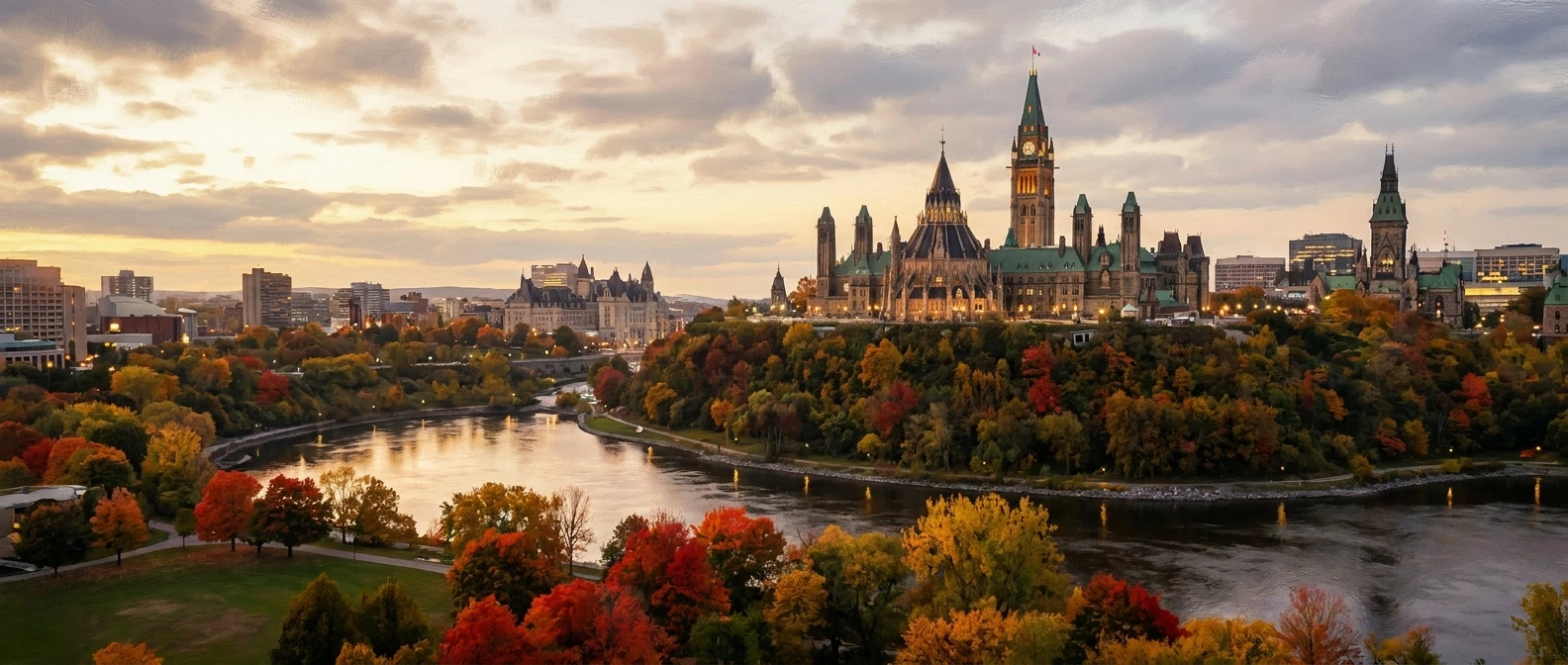
Start your trip aggressively at Parliament Hill. Even if you don’t care about politics at all, the stunning gothic architecture is worth the walk. Grab a heavy pub lunch at a nearby spot on Sparks Street, then walk straight down to the Rideau Canal locks to see exactly where the city physically connects to the massive river.
Day 2: Market Vibes and Masterpieces
Spend your entire morning getting lost in the ByWard Market. Grab an artisanal coffee, eat a hot beaver tail pastry, and browse the local craft stalls. In the afternoon, just cross the street to the spectacular National Gallery of Canada. You literally cannot miss it—there is a giant, slightly terrifying bronze spider sculpture called Maman waiting right outside the glass doors.
Day 3: Crossing into Quebec
Walk straight across the Alexandra Bridge into Gatineau, Quebec. The Canadian Museum of History sits right on the water’s edge and offers the absolute best panoramic view of the Ottawa skyline. Spend the afternoon fully exploring the grand exhibits on Indigenous history and Canadian culture.
Day 4: Nature in the City
Rent a bicycle and hit the smooth multi-use pathways running along the Ottawa River. Ride west until you hit Westboro Beach. Grab a late lunch at a cozy local cafe in the Westboro neighborhood, a highly walkable, trendy area packed tightly with independent outdoor gear shops and artisan bakeries.
Day 5: The Dark History
Take a quick drive out of the downtown core directly to the Diefenbunker, Canada’s fascinating Cold War museum. It is a massive, sprawling underground bunker built specifically to protect the highest levels of government from a nuclear attack. It is eerie, fascinating, and completely different from the usual fine art galleries.
Day 6: Flora, Fauna, and Farms
Visit the Central Experimental Farm and the gorgeous Dominion Arboretum. It is a massive, fully working farm situated right in the absolute middle of the city. You can walk peacefully among thousands of different rare tree species, which looks absolutely incredible when the leaves violently change colors in autumn.
Day 7: Local Neighborhood Vibes
Spend your final day wandering aimlessly through the Glebe. Walk down Bank Street, fiercely browse the vintage vinyl record shops, and eventually end up at Lansdowne Park. Catch a local fast-paced sports game if you can, or just relax at a sunny patio with a locally brewed, ice-cold craft beer to perfectly wrap up the trip.
There are plenty of weird misconceptions floating around about visiting the Canadian capital. Let’s clear them up fast.
Myth: Ottawa is just a boring, quiet government town.
Reality: While the federal government is undeniably a major employer, the city boasts a massive energetic student population, a rapidly booming tech sector, and an incredibly active nightlife, especially densely packed in the ByWard Market and Elgin Street areas.
Myth: You have to visit strictly in the summer to have fun.
Reality: Winter is actually absolute peak season for unique activities. The massive Winterlude festival, ice skating on the legendary canal, and nearby snowboarding make it a top-tier global winter destination.
Myth: You need to speak fluent French to get around.
Reality: The city is highly bilingual. While hearing French is very common, especially near the Quebec border, absolutely everyone speaks English, and all public services are readily available in both languages.
Myth: It is way too expensive for a budget backpacker or traveler.
Reality: Most of the premium national museums generously offer free entry on Thursday evenings, and hiking or biking the extensive beautiful trail network literally costs nothing.
Is Ottawa safe for solo travelers?
Yes, it is consistently ranked as one of the absolutely safest major cities in Canada. Just use basic common sense when walking alone at night.
How many days do I really need?
Three to four full days is the perfect sweet spot for the main sights, but a full week lets you truly explore the rugged nature trails and the quieter outer neighborhoods.
Do I need to rent a car?
If you stay downtown, no. The modern light rail transit (LRT) and walkable streets are totally enough. You only need a car for specific trips out to Gatineau Park or the rural Diefenbunker.
When is the absolute best time to visit?
May is phenomenal for the massive Tulip Festival, or February for the icy Winterlude. Early autumn is also stunning for the vibrant fall colors along the river.
Can I skate on the canal every single winter?
It depends strictly on the unpredictable weather. The ice must be structurally thick enough, which usually only happens consistently from late January to late February.
What is the one food I absolutely must try?
Hot classic poutine from a greasy street truck and a sugary BeaverTail pastry. Don’t leave the city limits without eating both.
Are the museums actually good for young kids?
Absolutely. The Museum of Nature and the massive Aviation Museum are incredibly interactive, loud, and built specifically for wild families to enjoy.
So, there you have it. Figuring out the absolute best things to do in ottawa just takes a little bit of smart planning and a willingness to occasionally step off the busy main streets. From incredible, century-old engineering marvels to cozy, hidden local pubs, the city delivers heavily on all fronts. As we keep traveling through 2026, the blend of deep nature and urban convenience here is hard to beat anywhere else. Don’t wait around—grab your tickets, pack smartly for the weather, and book your trip today to experience this amazing capital for yourself!