

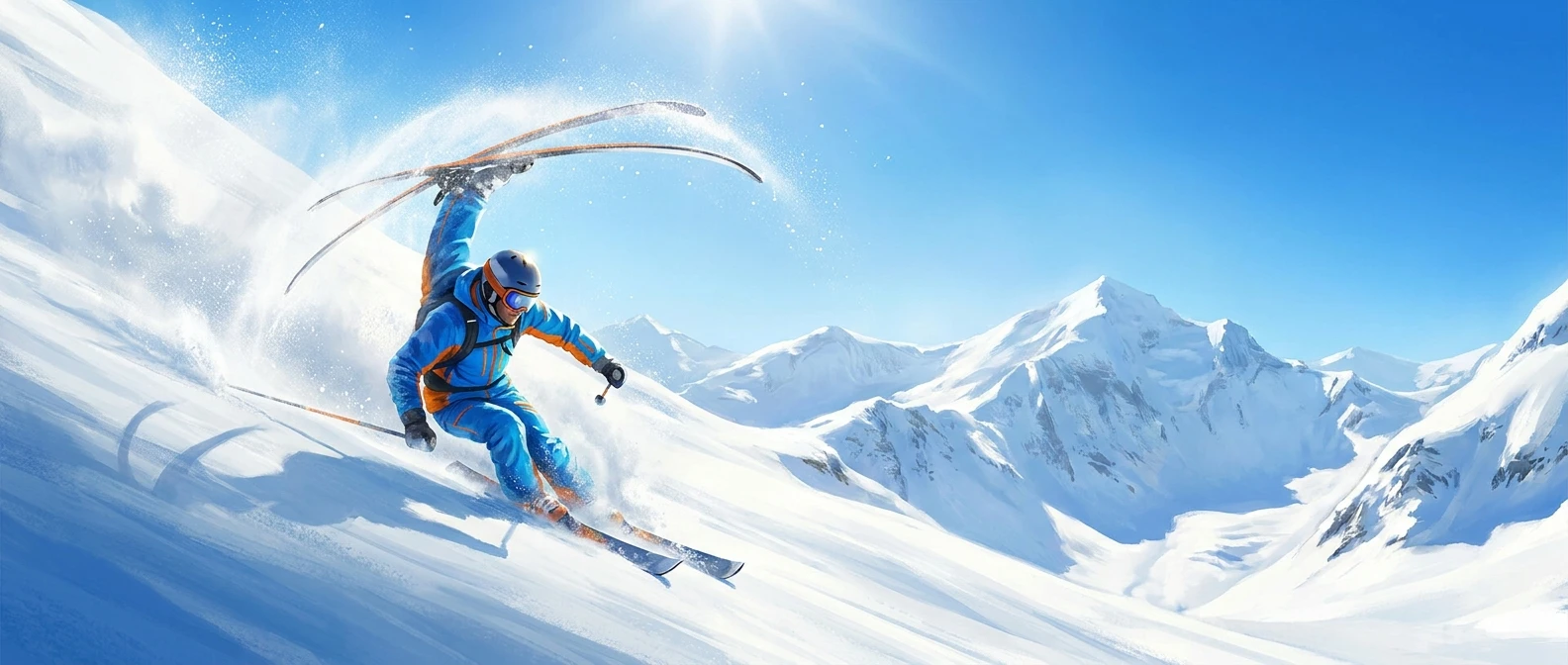
Mastering the Perfect Short Turn: Your Ultimate Guide
Hey there! Have you ever struggled to nail that flawless short turn when navigating steep, intimidating terrain or heavily crowded spaces? Honestly, getting this fundamental movement right changes absolutely everything about how you navigate the mountains. Growing up near the beautiful Carpathian Mountains in Ukraine, I have vivid memories of watching local instructors execute a highly technical short turn with such effortless, metronomic rhythm that it felt like absolute magic. They would carve down the notoriously icy slopes of the Bukovel resort, knees bouncing like shock absorbers, skis practically glued to the fall line, and never once losing their balance or control.
That precise, highly rhythmic action isn’t just some flashy party trick for professionals—it is a critical biomechanical survival skill that any dedicated person can learn. My primary goal here today is to help you build that exact, deeply ingrained muscle memory. If you desperately want better edge control, vastly reduced leg fatigue, and much sharper agility on the snow, you absolutely need to master the mechanics behind this movement. We are going to thoroughly break down the specific technique, dissect the physics making it possible, and hand you a rock-solid, step-by-step plan to practice. By the time you finish reading, you will know exactly how to actively guide your body through those rapid, snappy edge changes. Trust me on this, once you finally feel that incredibly smooth transition right under your feet, you will never want to go back to those lazy, wide arcs. Let us get straight to the mechanics.
When you execute a short turn correctly, you instantly unlock a massive, game-changing upgrade in your agility and overall speed management. The absolute primary benefit here is maintaining rhythm. Instead of picking up way too much speed and then desperately having to slam on the brakes, a tight, continuous turning radius keeps your momentum entirely in check the whole way down. Imagine you are navigating a incredibly dense forest trail full of pine trees, or you find yourself on a chaotic, crowded holiday piste; relying on wide, sweeping turns is inherently dangerous and highly impractical. You literally need quick, snappy pivots to stay safe.
Here is a detailed breakdown of how this specific technique compares to other popular styles:
| Turn Type | Speed Control Level | Ideal Terrain Application |
|---|---|---|
| Short Turn | Maximum (keeps pace steady and controlled) | Steep slopes, moguls, extremely tight spaces |
| Medium Radius | Moderate (builds comfortable momentum) | Well-groomed, wide-open recreational trails |
| Long Arc (GS) | Minimal (purely focuses on top speed) | Completely flat, empty race slopes |
Think about two very specific examples to make this concrete. Example one: You are cruising and suddenly hit an unexpected, massive patch of glare ice on a steep pitch. A wide, lazy turn causes you to immediately skid out and crash, but a rapid, compressed edge change digs your steel edges into the ice immediately, completely saving you from a nasty fall. Example two: You are actively navigating a very narrow, rocky chute. You literally do not possess the physical horizontal space to make big, sweeping movements. Snapping your legs rapidly back and forth is your only viable ticket down the mountain safely.
To actually pull this off reliably, you need to focus intently on three core physical principles:
- Upper Body Separation: Your chest and zipper must face straight downhill the entire time. Your legs do all the necessary twisting and turning beneath you.
- Pole Planting: This absolutely dictates your overall rhythm. A firm, aggressive pole plant signals the exact physiological moment to unweight your skis and transition to the next edge.
- Edge Engagement: You must physically roll your ankles and knees quickly, aggressively gripping the snow surface for a fraction of a second before immediately releasing.
It definitely takes focused practice, but the ultimate payoff in total control is massive.
Origins of the Technique
Back in the very early days of alpine sports, equipment was incredibly primitive—basically just long wooden planks securely strapped to flexible leather boots. You simply couldn’t easily carve a clean arc with that setup. Instead, the rugged pioneers of the sport had to literally jump, hop, or brutally muscle their way through tight, unforgiving spaces. The foundational concept of the short turn originated entirely as a pure survival mechanism for successfully navigating narrow, incredibly steep Alpine couloirs. Skiers could not afford to gain any excess speed, so they invented a highly rhythmic, bouncing motion famously called the “wedeln” over in Austria during the 1950s. This very early iteration was entirely about pivoting the heavy skis rapidly from side to side while attempting to keep the upper body completely quiet and facing the valley.
Evolution Through Gear Technology
As we slowly moved into the neon-soaked 1980s and 1990s, the gear shifted dramatically. Much stiffer plastic boots and the eventual introduction of parabolic, deeply shaped skis meant you no longer had to physically force the ski to turn; the aggressive sidecut geometry did the heavy lifting for you. The overall technique evolved from a purely skidded, defensive pivoting motion into a highly precise, aggressively carved action. Elite athletes quickly realized that if they utilized the natural, built-in flex of the modern equipment, they could generate a massive rebound effect. By aggressively pressuring the ski at the tail end of one arc, the ski would literally pop them instantly into the next one. This completely changed the game.
The Modern State of Mastery
Fast forward to the year 2026, and the biomechanics have been relentlessly optimized to a near-perfect science. Today’s short turn is absolutely all about highly calculated micro-movements. Professional instructors now actively use slow-motion video analysis and advanced biomechanical tracking sensors to perfect edge angles down to the single degree. It is no longer just a basic necessity for steep terrain; it stands as the absolute gold standard for demonstrating true, undeniable mastery over your equipment.
The Biomechanics of Edge Changes
To truly master this, we have to thoroughly examine what your physical body is actually doing. Experts call it “angulation.” In plain, simple terms, this primarily means aggressively bending your body into a distinct “comma” shape. Your legs physically tilt into the side of the hill to confidently grip the slick surface, while your upper body naturally leans out over your feet to maintain a perfect center of balance. During a rapid, high-speed transition, your center of mass practically takes a direct shortcut straight down the fall line, while your feet travel in an elongated S-pattern directly underneath you. This complex cross-under movement is exactly what makes the entire action look so incredibly smooth and fluid. Instead of desperately moving your whole heavy torso left and right across the hill, you keep your chest pointed firmly at the valley and let your relatively lighter legs act just like pendulums vigorously swinging side to side. It requires a remarkably solid core and highly activated fast-twitch muscle fibers located in your thighs and calves.
Physics and Rebound Mechanics
There is some very serious, highly quantifiable physics happening right under your stiff boots. When you apply massive physical pressure to a curved steel edge against a hard, icy surface, you rapidly build up intense kinetic energy. Here is exactly what the science dictates about the process:
- Centripetal Force Creation: As you aggressively push outward against the apex of the turn, the solid ground forcefully pushes back, dictating a tight circular path.
- Potential Energy Release: Physically bending the core material of the ski stores immense energy. When you suddenly release that pressure, it snaps back rapidly, literally lifting you upward into the next edge transition.
- Friction Management: A remarkably quick, highly sharp edge engagement creates brief but incredibly high friction, perfectly checking your top speed without completely killing your forward momentum.
Understanding this raw physics helps you finally realize that you definitely shouldn’t fight the equipment. You just need to smartly guide it.
Ready to finally build this critical muscle memory once and for all? Here is a highly structured, remarkably strict 7-day progression plan to completely lock down the perfect technique.
Day 1: The Essential Stance Check
Start your day completely on flat ground. Bend your ankles and knees aggressively, keeping your body weight noticeably slightly forward. Hold your poles out in front of you like you are intently reading a broadsheet newspaper. If your basic stance is totally wrong, absolutely everything else falls apart immediately.
Day 2: Mastering Side Slips
Go directly to a mellow, uncrowded pitch. Stand perfectly sideways and gently release your uphill edges to smoothly slide down, then actively roll your ankles back into the hill to stop. This fundamental drill teaches you exactly where your specific edge bite point is located.
Day 3: The Falling Leaf Drill
Combine your sideways slipping with gentle forward and backward diagonal motion. This highly effective drill rapidly builds the crucial ankle mobility strictly required to delicately feather your edges without ever accidentally catching an edge and violently tumbling.
Day 4: Aggressive Hockey Stops
Point your tips straight down the fall line of the hill to gain moderate speed, then pivot both feet forcefully and completely to a dead, sudden stop. Do this repeatedly on both your left and right sides to actively build that explosive, dynamic twisting power in your lower body.
Day 5: Pole Plant Timing
Ski normally down a moderate slope, but heavily exaggerate your pole plants. Aggressively tap the snow exactly when you desperately want to trigger the turn. Your trusty pole acts strictly as the musical metronome for your entire bodily rhythm.
Day 6: Executing J-Turns
Make a rapid series of quick turns that sharply hook directly uphill at the very end, physically shaped exactly like the letter ‘J’. This drill firmly forces you to fully complete the turn and totally control your speed before initiating the next arc.
Day 7: Linking It All Together
Find a moderately steep, perfectly groomed slope. Pick an imaginary straight line directly down the hill and actively try to make 20 rapid-fire turns while staying totally within a narrow three-meter horizontal corridor. Keep your chest facing the valley securely, plant that pole firmly, and let those legs swing freely!
There is honestly a lot of terribly bad advice floating around out there on the internet and chairlifts. Let us decisively clear up some incredibly common misconceptions right now.
Myth: You absolutely need to aggressively swing your arms and shoulders wildly to actively force the heavy skis around the corner.
Reality: Swinging your upper body actually severely throws you off balance and ruins your momentum. Your chest and shoulders should remain completely quiet and facing downhill strictly while your lower legs do all the heavy rotational work underneath you.
Myth: Short turns are exclusively reserved for elite experts skiing purely on terrifying double-black diamond runs.
Reality: It is fundamentally a basic survival skill. Mastering this specific technique actually makes cruising intermediate slopes significantly safer because you finally possess total, uncompromising control over your top speed.
Myth: You physically have to jump violently into the air to get your skis to abruptly change direction quickly.
Reality: While popping and jumping slightly works decently in heavy powder, on packed hardpack snow you desperately want to efficiently use the natural rebound of the ski. A proper, well-timed weight shift and edge release will pop you wonderfully smoothly into the next arc without strictly needing to physically launch yourself upward.
Why do my thighs burn so intensely?
You are highly likely squatting way too low in the saddle and actively fighting gravity instead of smartly using proper skeletal alignment to bear your weight.
How do I immediately stop skidding outwards?
Focus purely on rolling your ankles significantly earlier in the physical transition phase to confidently engage the sharp edge much sooner.
What specific length ski is absolutely best for this?
Shorter skis possessing a remarkably smaller turn radius (generally hovering around 12 to 14 meters) make practicing this technique substantially easier.
Can I practice this without any actual snow?
Yes, definitely! Vigorous inline skating and aggressive lateral agility drills performed in the gym actively build the exact same crucial muscle groups.
Why do my ski tips constantly cross over?
Your body weight is likely sitting way too far back on your heels. Actively drive your shins aggressively into the firm front tongues of your plastic boots.
Does boot stiffness strictly matter here?
Absolutely it does. A much stiffer boot efficiently transfers your tiny micro-movements straight down to the ski vastly faster than a soft, sloppy boot.
How long does it realistically take to learn?
With highly focused, dedicated drills, you can easily see truly massive improvement in just one single week of effort.
Getting this incredibly dynamic movement right definitely takes some serious patience, but the sheer feeling of practically dancing down a steep, intimidating face in total, uncompromising control is totally unmatched. Stop endlessly making wide, lazy, dangerous arcs across the entire piste and aggressively start snapping those edges back and forth! Hit the snowy slopes this weekend, actively try out our intensive 7-day training plan, and definitely share your awesome progress with us in the comments below.