
Dealing with a Gardiner Closure: What You Need to Know
Every driver navigating downtown Toronto dreads the flashing overhead signs announcing an upcoming Gardiner closure, knowing the traffic congestion that inevitably follows. As one of the most critical transportation arteries in North America, the F.G. Gardiner Expressway handles an immense volume of daily commuter and commercial traffic. When maintenance, emergency repairs, or long-term rehabilitation projects force a shutdown, the ripple effects are felt across the entire Greater Toronto Area. Commuters face immediate challenges, ranging from doubled travel times to navigating unfamiliar arterial roads. However, a proactive approach can significantly mitigate the frustration associated with these disruptions. Understanding the mechanics behind a Gardiner closure is not just about finding a faster route; it is about grasping the complex urban planning and engineering efforts required to keep an aging infrastructure safe. The ongoing Strategic Rehabilitation Plan, a multi-billion dollar municipal initiative, guarantees that closures will remain a reality for years to come. By familiarizing yourself with detour strategies, public transit alternatives, and the underlying reasons for these extensive repairs, you can turn a chaotic commute into a manageable journey. A well-prepared driver anticipates the gridlock and adapts seamlessly to the shifting landscape of downtown traffic.
The Anatomy of Expressway Shutdowns
Understanding the impact of a Gardiner closure requires examining the specific parameters of urban traffic displacement. When an elevated highway is taken out of commission, the sheer volume of displaced vehicles overwhelms parallel corridors like Lake Shore Boulevard, King Street, and Queen Street. Municipal traffic engineers deploy dynamic signal timing and increased police presence at major intersections, but the sheer math of vehicle displacement means delays are unavoidable. The primary benefit of planning ahead during these periods is the reclamation of your personal time and the reduction of fuel consumption caused by excessive idling. Value propositions for commuters who plan ahead include significantly lower stress levels, reliable arrival times for critical appointments, and the financial savings of utilizing bulk transit passes rather than burning premium fuel in bumper-to-bumper gridlock.
Read also: edmonton fire Safety Guide & Tips; Flooding in Montreal: Complete Preparedness Guide.
To navigate these disruptions effectively, drivers must categorize the type of closure they are facing. Not all shutdowns are created equal.
| Closure Type | Typical Duration | Primary Impact |
|---|---|---|
| Routine Maintenance | Friday 11 PM to Monday 5 AM | Severe weekend congestion on adjacent surface routes and local delays. |
| Major Rehabilitation Phase | Months to Years | Permanent route shifts, lane reductions, and long-term commuter adaptation. |
| Active Transportation Events | Sunday mornings (Seasonal) | Brief recreational access, minor detours, quickly resolved by afternoon. |
Implementing a survival strategy for a Gardiner closure involves a few non-negotiable steps. Establishing a routine before the barricades go up is the key to maintaining your sanity.
- Subscribe directly to official municipal traffic alert systems to receive real-time push notifications regarding emergency lane reductions.
- Test alternative transit options, such as regional trains or subway lines, during a normal week so you are familiar with the schedules and parking situations.
- Pre-program multiple navigation applications with offline maps to ensure you have access to dynamic detour routes even if cellular networks become congested.
The Origins of the Expressway
To fully appreciate the necessity of a Gardiner closure, one must look back at the origins of the infrastructure. Proposed and championed by Frederick G. Gardiner in the 1950s, the expressway was designed to usher Toronto into the modern automotive age. Construction began in 1955 and was completed in 1964, connecting the expanding western suburbs directly to the downtown commercial core. At the time of its design, engineers could not have predicted the sheer volume of heavy transport vehicles that would eventually traverse its concrete decks, nor could they fully anticipate the harsh reality of decades of Canadian winters. The original construction utilized standard reinforced concrete, a material choice that was revolutionary at the time but vulnerable to the specific environmental stressors of a lakeside urban environment.
Evolution of Maintenance Protocols
By the late 1980s and early 1990s, the expressway began showing severe signs of structural fatigue. The primary culprit was the extensive use of de-icing salts during winter months. As snow and ice melted, chloride-laden water seeped into the microscopic pores of the concrete, eventually reaching the steel reinforcing bars (rebar) embedded within. When steel rusts, it expands up to six times its original volume, causing the surrounding concrete to crack and break away—a process known as spalling. This led to high-profile incidents of concrete chunks falling onto the roads below, forcing the city to adopt aggressive, piecemeal maintenance strategies. The concept of a weekend Gardiner closure became a regular fixture of city life as crews rushed to patch deteriorating sections.
The Modern State of Traffic Management
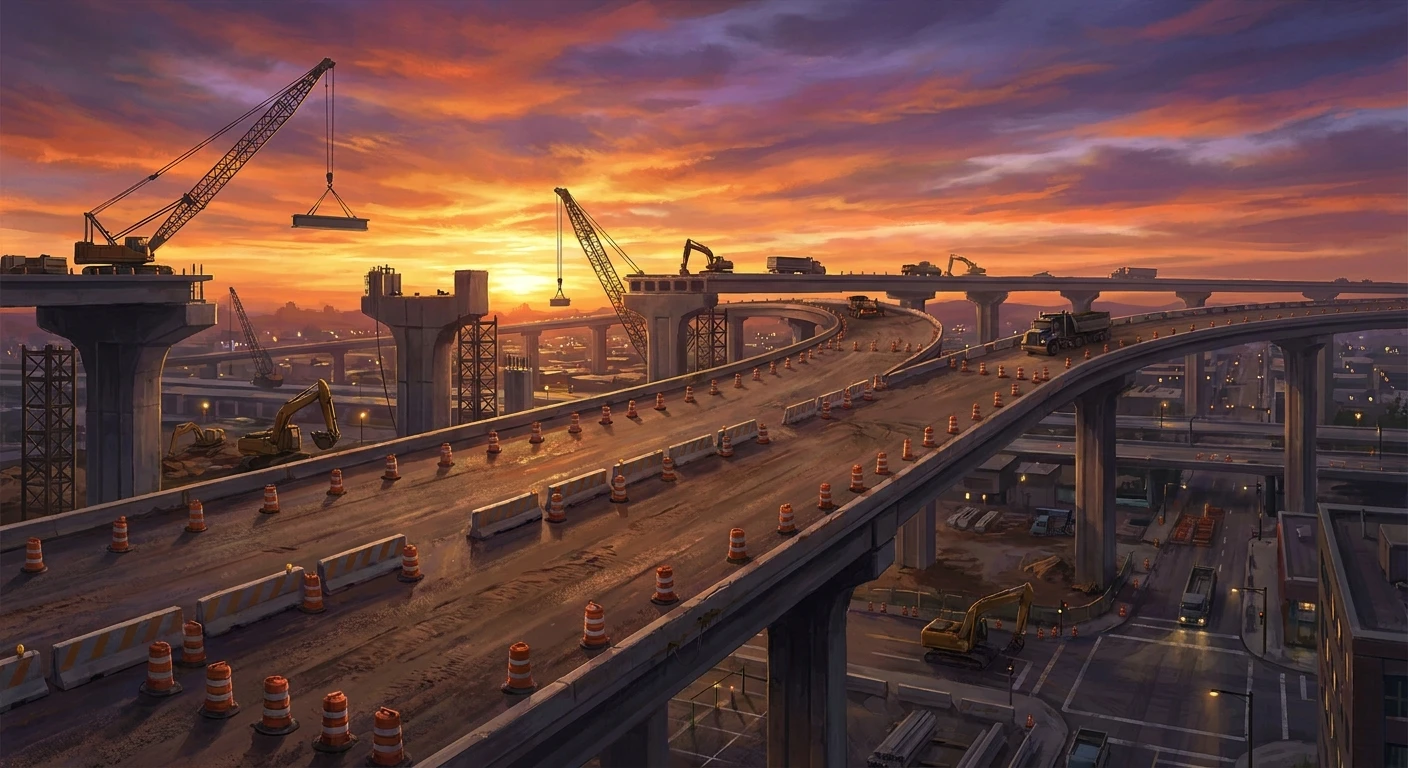
Today, the approach has shifted from reactive patching to proactive, comprehensive rehabilitation. The city government engaged in a massive public debate over whether to tear down the eastern portion of the highway entirely or rebuild it. Ultimately, a hybrid approach was chosen, preserving the vital traffic link while completely replacing the aging structural elements. This modern state of management means that a Gardiner closure is no longer just about fixing potholes; it involves massive engineering feats, such as demolishing entire structural bents and dropping in pre-cast concrete sections using heavy-lift cranes. The scale of the current project dictates that closures are meticulously planned and executed with military precision to minimize the economic impact on the region.
Structural Engineering and Concrete Degradation
The technical reality behind a Gardiner closure lies in the advanced science of civil engineering. When road sections are closed off, engineers are not merely pouring new asphalt. They are replacing the fundamental structural integrity of the elevated viaduct. A key focus is combating the alkali-silica reaction, a chemical process that causes the internal breakdown of older concrete mixtures. Modern replacements utilize high-performance concrete (HPC) mixed with specialized synthetic fibers that prevent water ingress. Additionally, the new infrastructure incorporates advanced cathodic protection systems. By applying a small electrical current to the steel reinforcement, engineers can chemically halt the corrosion process, ensuring that the new decks will last for decades without requiring the constant emergency repairs of the past.
Traffic Flow Dynamics and Route Diversion
From a technical standpoint, managing the traffic during a Gardiner closure relies heavily on advanced computational modeling. Municipal traffic control centers utilize sophisticated algorithms to predict how the displaced 140,000 daily vehicles will behave. By analyzing historical data, engineers can adjust the signal timing on parallel routes like Lake Shore Boulevard and the Don Valley Parkway to accommodate the surge in volume. This dynamic route diversion is critical to preventing gridlock from spreading deep into residential neighborhoods.
- High-performance concrete mixtures are deployed to cure rapidly, allowing for faster reopening of lanes.
- Cathodic protection systems are integrated directly into the new structural supports to prevent future rebar expansion.
- Bearing pad replacements allow the massive concrete girders to expand and contract safely with fluctuating seasonal temperatures.
- Intelligent Transportation Systems (ITS) provide automated, real-time data to overhead digital signs, warning drivers of delays before they reach the decision points.
Day 1: Assess the Closure Scope
When a long-term Gardiner closure is announced, your first step is to accurately assess the scope of the project. Read the official municipal press releases to determine exactly which ramps and lanes are affected. Understanding whether the closure is a full directional shutdown or a partial lane reduction will dictate your entire strategy.
Day 2: Map Alternative Routes
Take the time to physically and digitally map out alternative surface routes. Relying solely on GPS the morning of the commute is a recipe for frustration, as algorithms often send thousands of drivers onto the same narrow side streets. Identify broader arterial roads that have the capacity to handle heavy traffic.
Day 3: Test Transit Options
Dedicate one day to testing a completely different mode of transportation. Whether it is taking a regional commuter train or utilizing the local subway system, experiencing the alternative before the highway shuts down removes the anxiety of navigating a new system under pressure.
Day 4: Adjust Commute Timings
Traffic during a Gardiner closure operates on a heavily modified peak schedule. If possible, negotiate flexible working hours with your employer. Leaving for work just forty-five minutes earlier or later can drastically alter your commute time, allowing you to bypass the worst of the localized gridlock.
Day 5: Coordinate Carpooling
Reduce the number of vehicles on the road by coordinating a carpool with colleagues or neighbors. Utilizing High Occupancy Vehicle (HOV) lanes on connecting highways can shave significant time off the initial leg of your journey before you reach the downtown core.
Day 6: Monitor Real-Time Traffic
Make it a habit to check live traffic cameras and community-driven navigation apps before you even start your engine. Real-time monitoring allows you to spot secondary accidents or unexpected delays on your planned detour route, giving you the chance to pivot to a backup plan.
Day 7: Evaluate and Adapt
After the first week of a major Gardiner closure, sit down and evaluate your strategy. Did leaving early work? Was the train too crowded? Adapt your plan based on real-world experience rather than theoretical mapping. Commuting during major infrastructure projects requires constant flexibility.
Myths and Realities of Expressway Shutdowns
Myth: The highway is closed frequently just to annoy drivers or due to poor municipal planning.
Reality: The frequent closures are a necessary safety measure dictated by the physical realities of concrete degradation. The scheduled maintenance ensures that catastrophic structural failures do not occur.
Myth: Navigating through quiet residential side streets is always a faster alternative to arterial roads.
Reality: Side streets are entirely unequipped to handle highway-level traffic volumes. They quickly become gridlocked, and many feature turn restrictions designed specifically to trap and discourage cut-through traffic.
Myth: The rehabilitation project will never end and is just a permanent fixture of city life.
Reality: While it feels endless, the Strategic Rehabilitation Plan is a meticulously phased project with strict contractual deadlines and completion targets aimed at extending the highway’s life by decades.
Myth: All construction can easily be done at night to avoid daytime traffic disruptions.
Reality: Many complex engineering tasks, such as massive continuous concrete pours and heavy crane operations, require daylight for safety and specific temperature conditions for materials to cure properly.
Why is the Gardiner closed so often?
The expressway is undergoing a massive, multi-year rehabilitation project to replace aging concrete and steel that has deteriorated after decades of heavy use and harsh winters.
Can I walk or bike on the highway during a closure?
Unless the closure is specifically designated for an active transportation charity event, pedestrians and cyclists are strictly prohibited from entering the construction zones for safety reasons.
What happens to emergency vehicles during a shutdown?
Emergency medical services, police, and fire departments are integrated into the traffic management plan. They are often granted special access lanes or use pre-cleared surface routes to maintain response times.
Are the exit ramps closed as well?
It depends on the specific phase of the project. Often, if a mainline section is closed, the immediate on and off-ramps will also be blocked to prevent traffic from entering a dead zone.
How long will the entire rehabilitation take?
The comprehensive Strategic Rehabilitation Plan is slated to run into the 2030s, broken down into distinct phases to manage costs and limit the geographic scope of the disruption at any one time.
Is the Don Valley Parkway affected by these closures?
Yes, because the two highways connect directly. A shutdown on one invariably causes a massive backlog of traffic on the other, significantly altering commute times across the entire eastern corridor.
Where can I find the most accurate real-time updates?
The official municipal transportation portal and verified city social media accounts provide the most accurate, up-to-the-minute information regarding lane reopenings and emergency delays.
Navigating the complexities of urban infrastructure repair is never a pleasant experience, but understanding the sheer scale of the engineering effort provides necessary context. The temporary inconvenience of a Gardiner closure ensures the long-term safety and economic viability of the entire region. By utilizing strategic planning, embracing flexible transit options, and maintaining a calm demeanor behind the wheel, you can successfully manage the disruption. Before you head out on your next commute, always check the city’s official traffic portal to stay ahead of the gridlock.