
Unpacking Canadian Stereotypes: More Than Just Apologies and Maple Syrup
When you hear about Canadian stereotypes, you immediately picture a polite lumberjack apologizing to a moose while pouring maple syrup over a massive plate of poutine. These cultural shortcuts are everywhere, heavily promoted by global media, television shows, and even international tourism boards. But what is the actual truth behind these widely accepted images? A closer analysis of the local culture reveals a landscape far more complex, diverse, and fascinating than a simple punchline about freezing weather. The thesis here is straightforward: while many of these tropes possess a tiny grain of historical or social truth, they fail entirely to capture the highly urbanized, multicultural, and dynamic reality of the country today. By examining these clichés, you can better understand how national identities are packaged and sold on the global stage. You will see exactly how a massive country with drastically different regional climates and demographics ended up boiled down to a few recognizable, highly marketable quirks. Grab your favorite coffee, drop your preconceived notions, and get ready for a factual breakdown of what makes these generalizations tick, where they fall flat, and how the actual population handles the endless jokes about saying ‘eh’ at the end of every sentence.
The Real Impact of Cultural Clichés
You might wonder why anyone cares about generalized cultural tropes. The reality is that the perception of a nation directly influences everything from international relations and immigration to tourism and trade. A widely accepted cliché acts as a powerful brand. When people hold onto specific Canadian stereotypes, it shapes a global value proposition that highlights friendliness, safety, and natural beauty. This branding has tangible benefits. For instance, international students often choose universities in Toronto or Vancouver simply because they expect a hyper-polite, welcoming environment. Another prime example is the food export industry; the branding around pure, natural wilderness directly boosts the international sales of local agricultural products.
Read also: The Calgary Mayor: Complete Guide to City Leadership; Public Safety Minister: Essential Duties & Impact.
To genuinely grasp how these concepts embed themselves into the daily conversation, you have to observe the primary ways they manifest globally. Here are three major channels driving the narrative:
- Media Representation: Hollywood frequently uses northern cities as a stand-in for American locations, but when characters are explicitly written as locals, they receive exaggerated accents and overly agreeable personalities to provide cheap comic relief.
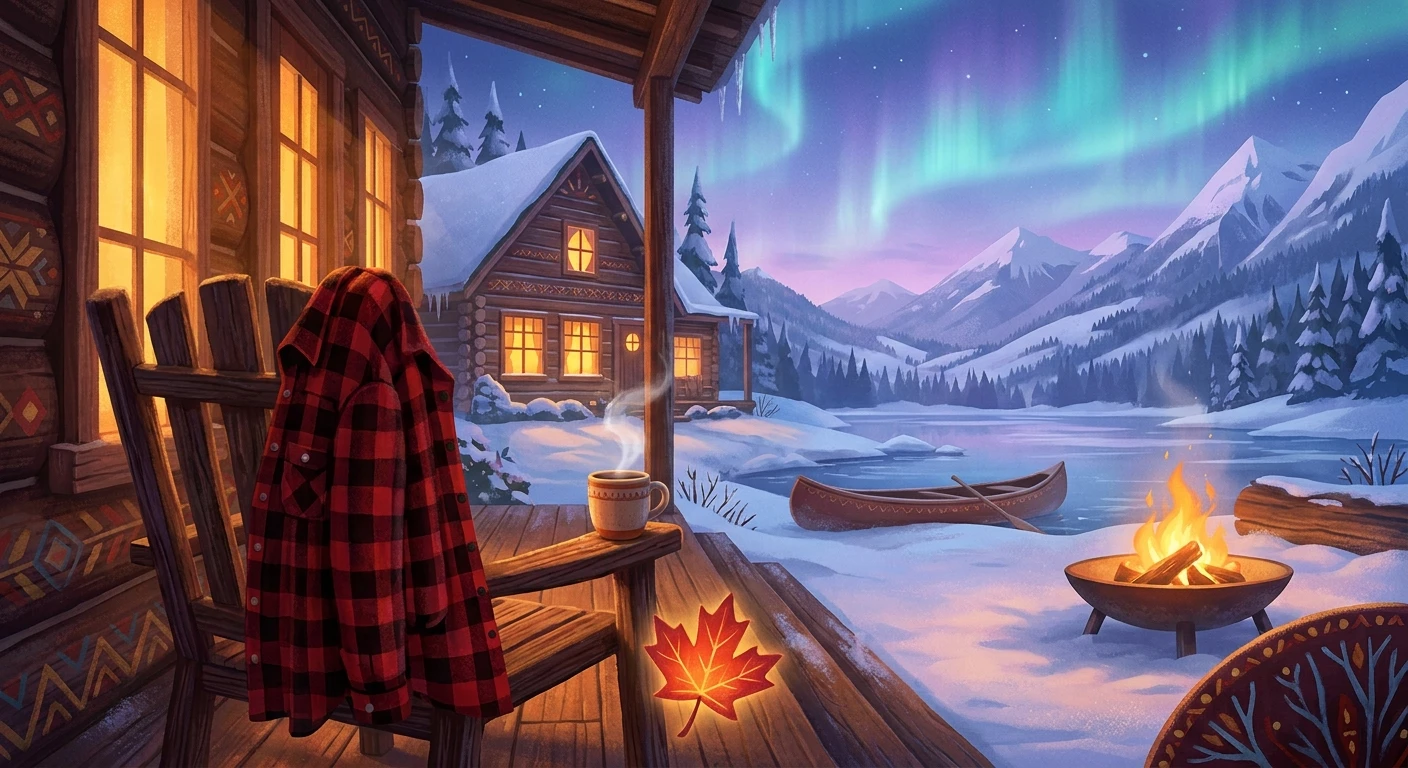
- Tourism Marketing: National travel campaigns lean heavily into the rugged wilderness aesthetic, actively promoting imagery of pristine lakes, Mounties, and untouched snow, reinforcing the idea that everyone lives in a cabin.
- Cross-Border Comparisons: Because the country shares a massive border with the United States, its identity is often framed entirely as a direct contrast to its southern neighbor, highlighting universal healthcare, gun control, and passive communication styles.
Here is a breakdown of some of the most famous examples, their roots, and what actually happens on the ground today.
| Stereotype | Historical Origin | Modern Reality |
|---|---|---|
| Compulsive Apologizing | British colonial etiquette mixed with conflict-avoidance cultural norms. | The ‘sorry’ is often a conversational filler or an expression of empathy, not an admission of guilt. |
| Living in Perpetual Winter | Early European exploration accounts focusing on harsh, unfamiliar northern climates. | The vast majority of the population lives near the southern border, experiencing hot, humid summers and four distinct seasons. |
| Obsession with Maple Syrup | Indigenous traditions of sap harvesting adopted and commercialized by early settlers. | While Quebec produces a massive global share, it is a specialty condiment rather than a daily dietary staple for most urbanites. |
Where Did These Ideas Come From?
The Origins of the Polite Canadian
If you trace back the roots of the hyper-polite persona, you hit a unique mix of British reserve and the harsh realities of early pioneer survival. Communities had to rely heavily on one another to survive brutal winters and difficult agricultural seasons. You simply could not afford to make enemies with your neighbors when you might desperately need their help to dig out of a snowstorm or share scarce resources. This fostered a baseline of civic cooperation and conflict avoidance. Over time, this community-focused mindset became codified into the national character, starkly contrasting with the rugged, hyper-individualistic frontier mythology celebrated just south of the border.
Evolution Through Global Media
Fast forward to the twentieth century, and the broadcasting era began to solidify these traits into a neat, exportable package. Sketch comedy shows like SCTV and later Trailer Park Boys or The Red Green Show played around with regional caricatures. While these were created by locals for a domestic audience, they eventually crossed borders. International audiences took the jokes literally. Hollywood writers, many of whom were actually expatriates from north of the border, started inserting these polite, hockey-loving, tuque-wearing characters into mainstream movies and sitcoms as a friendly inside joke. Before long, the caricature became the global standard.
The Modern State of Canadian Identity
Today, the demographic reality is vastly different from the historical lumberjack image. The country has one of the highest per-capita immigration rates in the world. Cities like Montreal, Calgary, and Toronto are incredibly diverse, globally connected tech and finance hubs. Yet, the old tropes stubbornly persist. Modern residents often have a dual relationship with these clichés. On one hand, they might roll their eyes at the endless jokes about pet beavers and igloos. On the other hand, there is a certain level of leaning into the joke. Owning the friendly, peaceful, and mildly eccentric label acts as a highly effective soft-power diplomatic tool, keeping the nation heavily favored in global public opinion polls.
The Sociology Behind the Tropes
Cultural Demographics and Statistical Realities
When sociologists examine the mechanics of national identity, they look at demographic distribution versus international perception. The technical term for what happens here is ‘cultural lag’. This is a sociological phenomenon where the cultural perception of a society fails to keep pace with its actual technological and demographic changes. The mathematical reality is that over eighty percent of the population is highly urbanized, living in major metropolitan areas rather than rural outposts. Furthermore, roughly ninety percent of the population lives within one hundred miles of the US border. The sheer statistical density contradicts the sprawling, empty-wilderness narrative sold to outsiders. Sociologists argue that these persistent tropes function as a form of boundary maintenance—a psychological tool used to differentiate a smaller population from a culturally dominant superpower next door.
Linguistic Markers and the Eh Phenomenon
Linguistically, the famous conversational quirks are a subject of intense academic study. Dialectologists classify the use of ‘eh’ as an invariant tag question. It is an utterance added to the end of a declarative sentence to turn it into a question, usually to solicit agreement, confirm comprehension, or establish solidarity with the listener. It is not just a random sound; it has strict syntactic rules governing its placement.
- Linguistic mapping shows that the use of the tag ‘eh’ is actually declining among urban youth, being steadily replaced by terms like ‘right?’ or ‘you know?’.
- The Apology Act, passed in Ontario in 2009, legally established that saying ‘sorry’ is an expression of sympathy and cannot be used as an admission of fault in a civil court of law.
- According to agricultural economics data, Quebec produces over seventy percent of the world’s maple syrup, utilizing advanced hydro-technologies and strategic reserves operated much like an oil cartel.
- Meteorological data confirms that southern regions like Windsor, Ontario, share the exact same latitude as northern California, experiencing intense summer heatwaves that completely defy the perpetual winter myth.
A 7-Step Guide to Understanding True Canadian Culture
If you want to move past the superficial jokes and truly understand the cultural fabric, you need a systematic approach. Here is a practical seven-step roadmap to parsing out the reality of life north of the 49th parallel.
Step 1: Look Beyond the Cold Weather Clichés
Stop packing a winter parka for a July trip to Toronto. Acknowledge the varied climate zones. Start by tracking the actual weather patterns across different provinces. You will quickly realize that coastal British Columbia rarely sees heavy snow, while the central prairies experience dramatic, rapid seasonal extremes.
Step 2: Understand the Nuance of the Sorry
Pay attention to the specific context of the apology. Treat the word ‘sorry’ as a standard social lubricant rather than a sincere admission of guilt. If someone bumps into you at the grocery store and you both apologize, recognize this as a mutual de-escalation tactic, not an assumption of blame.
Step 3: Recognize Regional Diversity
Abandon the idea of a single monolithic culture. The vibe in French-speaking Quebec is entirely different from the maritime culture of Nova Scotia or the ranching heritage of Alberta. Treat each province as a distinct cultural entity with its own history, economy, and unique social norms.
Step 4: Sample Authentic Cuisine Past Poutine
Broaden your culinary horizons significantly. While fries and cheese curds are fantastic, true modern cuisine here is defined by deep multicultural fusion. Try West Coast Pacific Rim seafood, Vancouver’s incredible dim sum, or the massive diverse Caribbean influences found throughout the Greater Toronto Area.
Step 5: Study Indigenous Influences
You cannot understand the true heritage without acknowledging the First Nations, Inuit, and Métis peoples. Make a conscious effort to learn about their history, art, and ongoing influence on the nation’s legal and cultural frameworks, all of which predate European settlement by thousands of years.
Step 6: Watch Local Cinema and Television
Skip the Hollywood representations and watch authentic domestic media. Check out independent films or critically acclaimed television series produced locally. These productions offer a much more accurate reflection of suburban and urban life without relying on tired, outdated lumberjack jokes.
Step 7: Engage with the Urban Reality
Finally, shift your focus from the wilderness to the metropolis. Read up on the tech booms in Kitchener-Waterloo, the real estate dynamics in Vancouver, and the massive financial sectors in downtown Toronto. Recognizing the country as a highly urbanized economic powerhouse shatters the quaint, sleepy village stereotype completely.
Debunking the Biggest Stereotypes
It is time to set the record straight on a few of the most stubborn misconceptions that absolutely refuse to fade away in popular culture.
Myth: Everyone is obsessed with hockey and plays it constantly from birth.
Reality: While ice hockey is the official national winter sport and holds immense cultural significance, changing demographics and the extremely high cost of equipment mean that sports like soccer and basketball actually boast higher participation rates among youth today.
Myth: It is always snowing, all year round, everywhere in the country.
Reality: The country experiences four very distinct seasons. Summers in the central and southern regions frequently push past thirty degrees Celsius with extreme, uncomfortable humidity.
Myth: Canadians are exactly like Americans, just living a bit further north.
Reality: Despite sharing a language and a highly integrated media landscape, the political systems, historical development, and societal values around healthcare, social safety nets, and gun ownership create a drastically different cultural mindset and daily reality.
Frequently Asked Questions & Final Thoughts
Are all Canadians overly polite?
No. They value civic order and politeness in public spaces, but they experience the exact same road rage, stress, and occasional rudeness as any other busy modern society.
Do they actually say eh all the time?
It is common in rural areas and among older generations, but it is becoming much less frequent in highly diverse, densely populated urban centers today.
Is healthcare completely free for everyone?
It is publicly funded through taxpayer money, meaning there are no point-of-care fees for essential medical services. However, things like dental care, vision, and prescriptions often require private insurance.
Does everyone speak both English and French?
No. While the country is officially bilingual at the federal level, the vast majority of the population consists of monolingual English speakers. French is predominantly spoken in Quebec and parts of New Brunswick.
Do people really live in igloos?
Absolutely not. This is a severe, highly outdated misconception. People live in standard modern housing, suburban homes, apartments, and high-rise condominiums.
Is the Royal Canadian Mounted Police their normal police force?
The RCMP is the federal police force. While they police some rural areas, most major cities and provinces have their own local municipal police departments handling daily law enforcement.
Is Tim Hortons a daily ritual for everyone?
While the coffee chain is ubiquitous and culturally significant, plenty of locals prefer independent cafes, specialty roasters, or simply brewing their own coffee at home.
To wrap things up, Canadian stereotypes offer a fun, slightly skewed window into a much deeper cultural reality. The polite, winter-loving, syrup-drinking caricatures hold just enough truth to be globally recognizable, but they completely miss the vibrant, urban, and highly diverse heartbeat of the modern nation. Do not let the catchy clichés fool you—there is a massive, complex society waiting to be understood right behind the friendly apologies. Stop relying on outdated television tropes, grab a flight to one of these booming multicultural cities, and experience the real culture for yourself today!