

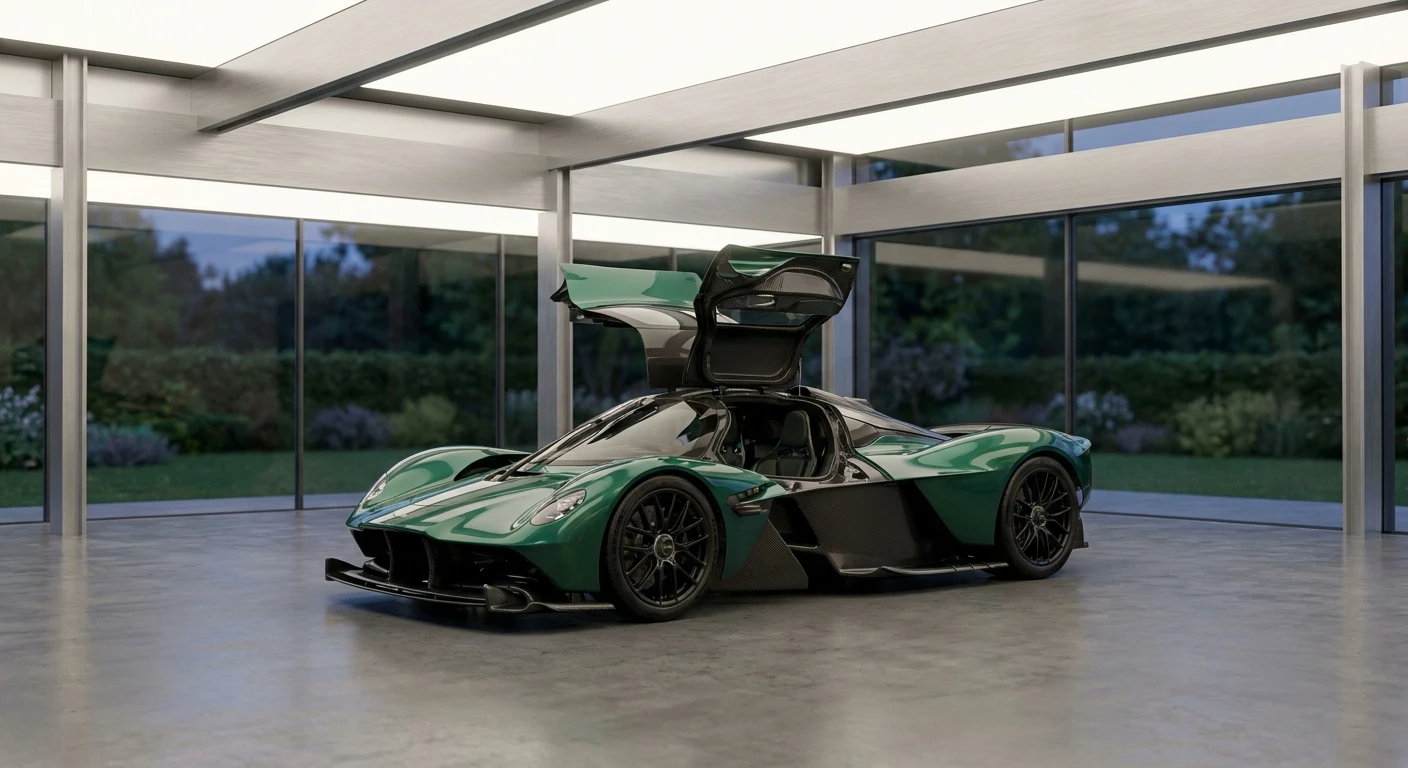
Understanding the Aston Martin Valhalla price and investment potential
The Aston Martin Valhalla price represents much more than a mere financial transaction; it is an entry ticket into a highly exclusive club of hybrid hypercar ownership. For automotive enthusiasts and serious collectors operating in the high-stakes luxury market, understanding the nuances of this valuation is critical. As of 2026, the automotive landscape has fully embraced electrification, but few manufacturers have managed to blend Formula 1-derived technology with road-legal comfort as seamlessly as this British marque. The Aston Martin Valhalla price typically begins at roughly $800,000 for a base configuration, though taxes, importation fees, and bespoke factory customizations can easily push the final invoice well past the seven-figure mark. The thesis is clear: purchasing this mid-engine marvel is not just about raw top speed; it is an investment in cutting-edge aerodynamic architecture, sophisticated plug-in hybrid mechanics, and a meticulously crafted brand lineage. The integration of elite racing methodology into a road-going chassis dictates a high cost of research and development. The intricate carbon fiber weaves, the sophisticated hybrid battery management software, and the rigorous testing on the Nurburgring Nordschleife all contribute to the bottom line. Knowing precisely what is included in that steep valuation allows buyers to make informed decisions before allocating their capital.
Value Proposition and Core Benefits
When analyzing the overall cost structure of this vehicle, one must look beyond the badge. The substantial financial commitment secures a myriad of tangible and intangible benefits. The value proposition of the Valhalla lies heavily in its dual-purpose nature. It is engineered to deliver blistering track performance while retaining enough suspension compliance and ergonomic comfort for weekend touring. Two prime examples of this dual-purpose engineering include the active suspension system, which alters ride height and stiffness dynamically, and the advanced sound deadening materials that isolate the cabin from the raw mechanical symphony of the flat-plane crank V8 when cruising in electric-only mode.
Read also: Rogers Centre Renovations: Complete Modernization Details; Rolls-Royce La Rose Noire Droptail: The Ultimate Luxury Car.
The following financial and configuration breakdown illustrates this:
| Configuration Level | Estimated Cost Impact | Key Features and Additions |
|---|---|---|
| Base Allocation | $800,000 Starting | Standard exterior paint, baseline interior trim, standard wheels. |
| Track Package | +$50,000 to $75,000 | Upgraded carbon-ceramic brakes, aggressive aero tweaks, lightweight wheels. |
| Q by Aston Martin Bespoke | +$100,000 to Unlimited | One-off paint-to-sample colors, custom interior stitching, exposed carbon fiber panels. |
To fully comprehend what drives this pricing structure, buyers should consider these three primary ownership factors:
- Aerodynamic Mastery: The car utilizes advanced venturi tunnels and active aerodynamic wings to generate roughly 600 kilograms of downforce at 150 miles per hour, completely eliminating the need for massive, drag-inducing fixed rear spoilers.
- Hybrid Powertrain Complexity: Merging an internal combustion engine with multiple electric motors requires highly sophisticated software mapping and heat management systems, significantly raising manufacturing and research costs.
- Exclusivity and Depreciation: Production is strictly limited to 999 units globally. Vehicles with such restricted production runs traditionally exhibit strong resistance to depreciation, often appreciating in value on the secondary collector market over time.
Origins of the Mid-Engine Ambition
The journey toward the current iteration of the vehicle began several years ago under the internal codename Project 003. Aston Martin historically built front-engine grand tourers, heavily relying on massive V12 engines to propel heavy, luxurious coupes. The shift toward a mid-engine layout marked a monumental paradigm shift for the brand. Initially introduced as the AM-RB 003 concept, the goal was to create a ‘son of Valkyrie’ — a car that borrowed heavily from the Adrian Newey-designed hypercar but offered a more usable, street-friendly package. This initial conceptual phase laid the groundwork for the extreme styling and aerodynamic efficiency that would eventually justify the premium pricing structure.
Evolution of the Powertrain and Design
During the developmental lifecycle, the car underwent significant mechanical revisions that directly impacted the ultimate retail cost. The original concept called for an in-house developed turbocharged V6 engine paired with a hybrid system. However, strategic realignments and a deep partnership with Mercedes-AMG resulted in a pivot toward a proven, monstrously powerful 4.0-liter twin-turbocharged V8. This strategic move not only ensured long-term reliability but also dramatically altered the car’s thermal dynamics and weight distribution. Engineers spent thousands of hours in the wind tunnel redesigning the rear clamshell to accommodate the new engine architecture, utilizing Formula 1 computational fluid dynamics software to optimize airflow over every square inch of the bodywork.
The Modern State of the Hypercar Market
Operating in 2026, the luxury hypercar segment is more competitive than ever. The Valhalla sits in a unique market position, bridging the gap between standard production supercars and ultra-exclusive track prototypes. The final production version showcases a matured design language, featuring an integrated roof scoop for engine induction, massive dihedral doors that take a portion of the roof with them for easier ingress, and a beautifully appointed interior that prioritizes driver engagement. The modern state of the project reflects a refined, highly polished product that seamlessly integrates electric mobility with raw combustion power, commanding respect on both the concourse and the race track.
Aerodynamic Architecture and Material Engineering
The foundation of the vehicle is a bespoke carbon fiber monocoque tub, developed in conjunction with Multimatic. This central tub provides immense torsional rigidity while keeping the overall curb weight remarkably low. Unlike traditional metal chassis, carbon fiber composite can be molded to integrate structural mounting points directly into the tub, reducing the need for heavy steel subframes. The exterior skin is similarly crafted from lightweight composites, meticulously shaped to manipulate airflow. Additionally, the suspension system features pushrod architecture at the front, a design lifted straight from open-wheel racing, which drastically reduces unsprung mass and improves steering feedback. The front splitter directs high-pressure air underneath the car, where deep venturi tunnels accelerate the flow, creating a massive low-pressure zone that sucks the car onto the tarmac.
Plug-in Hybrid Mechanics and Drivetrain
Beneath the carbon fiber skin lies a powertrain of immense complexity. The core is the bespoke flat-plane crank 4.0L twin-turbo V8, which revs to a blistering 7200 RPM and is responsible for the bulk of the power output. This internal combustion heart is supplemented by a sophisticated 400-volt battery system and multiple electric motors.
- The front axle houses two electric motors, providing true torque vectoring and all-wheel-drive capability for maximum traction during hard acceleration and cornering.
- A third electric motor is integrated into the 8-speed dual-clutch transmission, supplementing the internal combustion engine and providing instant torque fill to eliminate any perceptible turbo lag.
- The transmission itself completely lacks a physical reverse gear; instead, the vehicle reverses entirely under electric power, saving significant weight in the gearbox assembly.
- The high-density 400V battery pack allows for a modest electric-only driving range, enabling silent, zero-emission travel through urban centers before the V8 violently awakens on the open road.
Step 1: Initial Allocation Inquiries
Securing a spot on the waiting list requires proactive engagement. Interested buyers must contact an official dealership directly to express intent. Because production is strictly capped at 999 units globally, mere financial capacity does not guarantee an allocation; a history of brand loyalty often plays a crucial role in securing a build slot.
Step 2: Placing the Reservation Deposit
Once approved for an allocation, buyers are required to place a substantial initial deposit. This non-refundable reservation fee secures the chassis number and effectively locks in the base vehicle cost. The deposit amount can vary by region but generally serves as a serious commitment to the purchasing process.
Step 3: Bespoke Configuration via Q by Aston Martin
This is where the pricing can escalate rapidly. Buyers are invited to participate in the Q by Aston Martin bespoke customization program. Through virtual reality suites and physical material samples, clients can select everything from unique paint formulations and tinted carbon fiber to custom leather stitching and personalized interior badging.
Step 4: Finalizing the Purchase Contract
Following the finalization of the vehicle’s specification, a formal purchase contract is drawn up. This document details the precise final cost, incorporating all selected options, destination charges, and applicable luxury taxes. At this stage, a secondary progress payment is often required before physical manufacturing begins.
Step 5: Production Tracking and Updates
The manufacturing process of a hand-built hypercar takes several months. Clients receive regular updates, including photographs of their specific carbon tub being laid up, the engine being dyno-tested, and the body panels being fitted. This transparent process builds anticipation and justifies the extensive waiting period.
Step 6: Arranging Specialized Hypercar Insurance
Insuring a vehicle of this magnitude requires specialized underwriting. Standard automotive policies are completely insufficient. Owners must secure agreed-value policies through high-net-worth insurance brokers, taking into account the vehicle’s storage conditions, anticipated annual mileage, and replacement costs.
Step 7: Taking Delivery and Initial Break-in
The final step involves taking physical delivery, either at the local dealership or directly at the factory in Gaydon. The handover includes a comprehensive tutorial on the vehicle’s complex driving modes, hybrid charging procedures, and active aerodynamics. Owners are then advised to follow a strict mechanical break-in protocol for the first thousand miles.
Debunking Hypercar Misconceptions
Myth: The vehicle is simply a rebadged, cheaper version of the Valkyrie.
Reality: It utilizes an entirely different mechanical architecture, favoring a twin-turbo V8 plug-in hybrid setup over the Valkyrie’s naturally aspirated V12, and is explicitly designed for far greater road usability and comfort.
Myth: The stated base sticker cost represents the maximum amount a buyer will spend.
Reality: The base figure is merely a starting point. High-end customizations, carbon fiber track packages, and local luxury import taxes routinely add hundreds of thousands of dollars to the final invoice.
Myth: It is a fully electric vehicle.
Reality: While it features substantial electric architecture and a battery pack for short zero-emission trips, the primary source of propulsion remains a highly tuned internal combustion engine.
Myth: Anyone with enough money can walk into a dealership and buy one immediately.
Reality: Due to the capped production run, allocations are heavily restricted and often prioritized exclusively for established clients with a history of purchasing flagship models from the brand.
Is the vehicle fully street legal?
Yes, unlike pure track toys, it is comprehensively homologated for global road use, complete with all necessary safety and emissions equipment required for highway driving.
How many units are being produced?
Global production is strictly limited to 999 examples to preserve market exclusivity and long-term collector value.
What is the maximum top speed?
When operating in optimal conditions with maximum combined power output, the vehicle is capable of exceeding 217 miles per hour.
Does it feature an actual Formula 1 engine?
No, it utilizes a Mercedes-AMG sourced 4.0-liter V8, though the carbon chassis and aerodynamic concepts heavily borrow from F1 engineering principles.
What is the pure electric driving range?
The high-voltage battery allows for approximately 9 miles of silent, electric-only driving, perfect for zero-emission city zones.
Can the vehicle be driven in pure EV mode?
Yes, a dedicated EV mode allows the car to operate solely on the front electric motors for short urban commutes without engaging the V8 engine.
How does it compare to the Ferrari SF90?
It directly competes with the SF90, offering similar plug-in hybrid V8 performance but with a heavier emphasis on extreme, track-focused aerodynamics and limited production exclusivity.
Conclusion
The Aston Martin Valhalla price reflects a monumental achievement in modern automotive engineering, perfectly balancing the visceral thrill of internal combustion with the immediate torque of electric motors. It stands as a highly exclusive, beautifully crafted machine that demands a significant financial premium for its rarity and capability. If you are prepared to step into the ultimate tier of hybrid hypercar ownership and secure your piece of automotive history, contact your local authorized dealer today to inquire about secondary market availability or remaining build slots.