

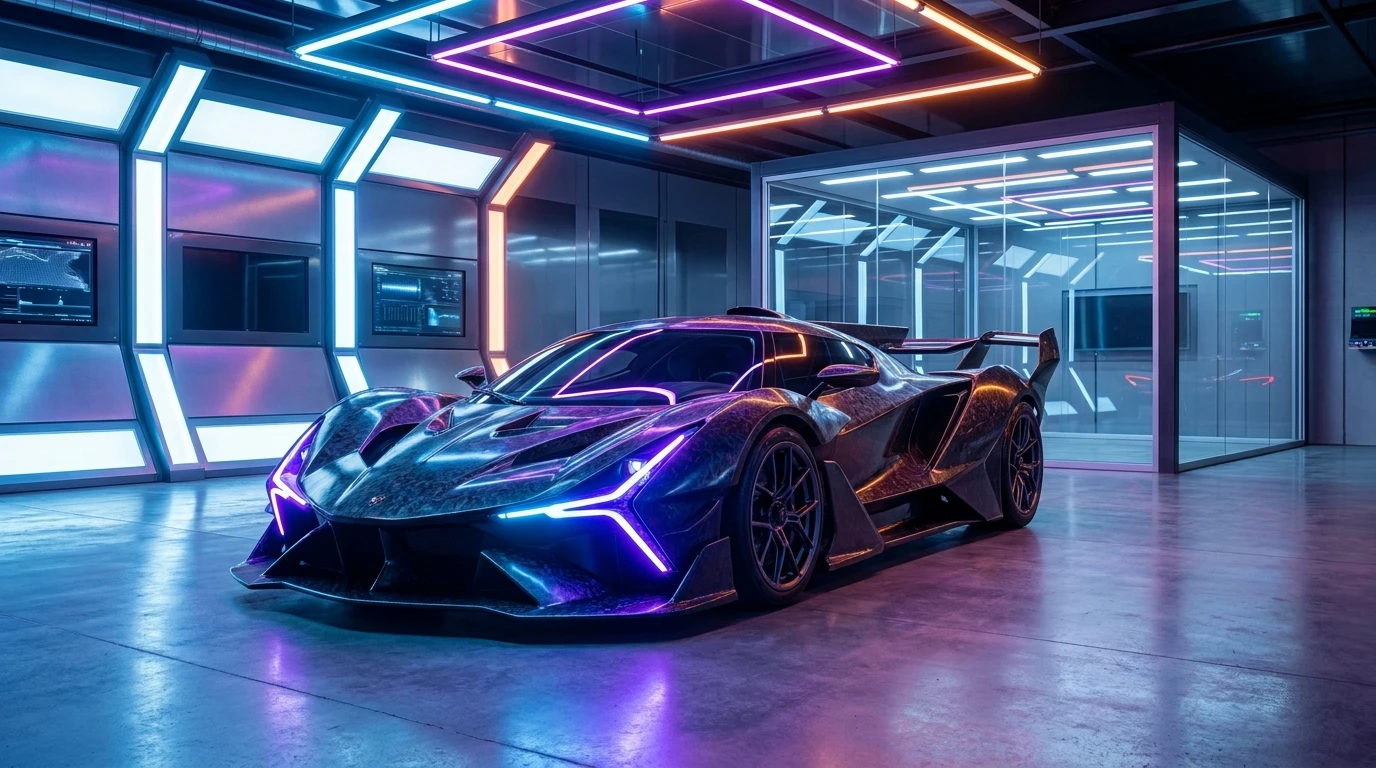
Apollo Evo Price: Understanding the Hypercar Hierarchy
Let us talk directly about the Apollo Evo price, a financial figure that commands just as much attention as the hypercar’s extraterrestrial, aggressive design language. When you look at the automotive landscape today, Apollo Automobil stands entirely apart by producing vehicles that look like they belong on a hostile alien world rather than a traditional race track. The Project Evo, serving as the highly anticipated successor to the legendary Intensa Emozione (IE), pushes the very boundaries of aerodynamic aggression and naturally aspirated mechanical performance. Securing one of these masterpieces requires an astronomical budget, with industry estimates placing the Apollo Evo price comfortably above the $3 million mark, closely mirroring the exclusive pricing strategy of its predecessor. You are not simply purchasing a method of transportation; you are acquiring a rolling piece of kinetic art that is engineered to absolute microscopic tolerances.
This extreme valuation is not arbitrary. Hypercars of this ultra-exclusive pedigree operate in a completely different financial stratosphere compared to standard exotic sports cars. The price tag reflects thousands of hours of bespoke engineering, wind tunnel testing, and the utilization of aerospace-grade materials that legacy manufacturers rarely deploy at this scale. Apollo has built its modern brand identity around delivering an uncompromised, raw, and deeply emotional driving experience that many contemporary hybrid hypercars often sanitize. We are going to examine the precise value proposition of this machine, the fascinating history behind the marque, the technical wizardry that makes it function, and the incredibly complex process of securing an allocation for such a rare vehicle.
Read also: The True Aston Martin Valhalla Price and Ownership Costs; KTM X Bow GT XR Price: Full Breakdown & Guide.
The Core Value Proposition and Cost Breakdown
Understanding the economics behind such an extreme machine requires looking past the surface aesthetics. The multi-million dollar valuation is justified by an uncompromising approach to automotive manufacturing where cost caps simply do not exist. When engineers are told to build the absolute peak of internal combustion performance without worrying about the final retail figure, the result is a vehicle built entirely from exotic composites, titanium, and forged alloys. The hypercar market demands exclusivity, and Apollo delivers this by ensuring that only a handful of these vehicles will ever exist globally. This scarcity inherently drives the value up, making the vehicle an investment asset just as much as a track-focused weapon.
| Component Category | Estimated Value Allocation | Primary Purpose and Function |
| Carbon Fiber Chassis & Active Aerodynamics | 40% of Total Engineering Cost | Providing extreme structural rigidity while manipulating airflow to generate massive downforce at high speeds. |
| Naturally Aspirated V12 Powertrain | 35% of Total Engineering Cost | Delivering immediate throttle response, raw mechanical acoustic brilliance, and relentless high-revving power. |
| Bespoke Interior & Telemetry Electronics | 25% of Total Engineering Cost | Ensuring the driver is perfectly positioned with custom-molded seats and real-time track data analysis tools. |
The justification for the massive financial commitment comes down to several heavily guarded manufacturing secrets and client privileges. Here is exactly why the market accepts this valuation:
- Hyper-limited production runs guarantee that owners will almost never encounter another identical vehicle in the wild, preserving extreme exclusivity.
- The extensive, uncompromised use of raw, exposed carbon fiber and aerospace-grade titanium ensures the vehicle remains feather-light while offering immense crash safety.
- Client-specific personalization programs dictate that no two cars are ever identical, with owners flying to the factory to specify every single stitch, paint flake, and ergonomic detail.
- The refusal to utilize heavy hybrid battery systems means the development budget went entirely into perfecting the raw internal combustion mechanics and advanced suspension kinematics.
Origins of Apollo Automobil
The story of this brand is a fascinating journey of ambition, failure, and ultimate resurrection. The company originally began under the vision of Roland Gumpert, a former Audi motorsport director who wanted to create a street-legal race car. The result was the Gumpert Apollo, a functionally brilliant but aesthetically polarizing supercar that dominated the Nürburgring lap times in the late 2000s. Despite its raw performance metrics, the original company faced severe financial difficulties and eventually faced insolvency. The market at the time was perhaps not fully prepared for a vehicle so uncompromisingly brutal, leading to a temporary halt in the brand’s ambitious dreams.
Evolution from the Intensa Emozione
The true turning point occurred when Ideal Team Venture acquired the rights to the brand, officially rebranding it as Apollo Automobil. They completely shifted the design philosophy from purely functional aesthetics to deeply emotional, dramatic styling. This new era was violently announced with the release of the Apollo Intensa Emozione (IE). The IE shocked the automotive industry with its naturally aspirated V12 engine, bat-mobile-like carbon fiber bodywork, and an exhaust note that sounded like vintage Formula 1 machinery. The IE proved that a market existed for ultra-expensive, highly dramatic hypercars that prioritized the emotional experience of driving over chasing purely mathematical top-speed records.
Modern State and the Project Evo
Building on the massive critical and commercial success of the IE, the company revealed the Project Evo. This vehicle represents the modern state of Apollo, taking the dramatic design language of the IE and turning it up to an almost frightening degree. The Evo features an incredibly complex front fascia defined by an X-shaped daytime running light signature and aerodynamic channels that look completely alien. It serves as a statement that Apollo intends to remain at the absolute pinnacle of the boutique hypercar market, competing directly with established giants like Pagani and Koenigsegg while offering a distinctly sharper, more aggressive flavor of automotive performance.
Aerodynamic Witchcraft and Downforce
When you examine the exterior of the Evo, you are looking at applied physics. Every single crease, winglet, and massive diffuser fin serves a dedicated aerodynamic purpose. The engineers utilized advanced computational fluid dynamics to ensure that the air flowing over, under, and through the car presses it firmly into the tarmac. The rear features a wildly complex active spoiler system that adjusts its angle based on speed, steering input, and braking pressure. This level of aerodynamic witchcraft ensures that the vehicle remains entirely stable when cornering at speeds that would physically terrify the average driver.
Naturally Aspirated V12 Supremacy
In an era where almost every legacy supercar manufacturer is downsizing their engines and bolting on heavy hybrid electric motors, Apollo actively rebels against the trend. They understand that their elite clientele desires the visceral, mechanical connection that only a naturally aspirated V12 engine can provide. The throttle response is instantaneous, and the acoustic profile is engineered to resonate directly in the driver’s chest. This engine is a masterpiece of modern metallurgy, capable of revving to spectacular heights while delivering linear, predictable power that inspires confidence on a race track.
- The chassis is constructed from an advanced carbon fiber monocoque that provides immense torsional rigidity while keeping the overall dry weight astonishingly low.
- The suspension system utilizes race-derived pushrod kinematics, allowing for microscopic adjustments to ride height, camber, and dampening stiffness.
- The striking X-shaped daytime running lights serve as the new corporate face of the brand, instantly distinguishing the vehicle from any other hypercar on the road.
- The exhaust system is manufactured from lightweight inconel and titanium, tuned specifically to amplify the high-frequency acoustics of the V12 power plant.
Step 1: Establish Brand History
Securing a multi-million dollar hypercar is not as simple as walking into a dealership with a briefcase full of money. Boutique manufacturers like Apollo heavily prioritize their existing clientele. To even be considered for an Evo allocation, a buyer typically needs a documented history of purchasing and maintaining elite exotic vehicles, demonstrating that they are a true enthusiast who will appreciate the engineering.
Step 2: Liquidate Immediate Capital
Once a buyer registers their serious intent, substantial financial liquidity must be immediately available. The purchasing process usually requires a massive non-refundable deposit just to secure a production slot. This initial payment funds the procurement of the bespoke raw materials necessary for that specific chassis build.
Step 3: Secure an Allocation Slot
Allocations are fiercely contested. With production numbers strictly limited, billionaires actively compete for a spot on the waiting list. The factory carefully vets each applicant, ensuring the vehicles go to owners who align with the brand’s highly exclusive, enthusiast-driven image rather than pure flippers looking for a quick profit.
Step 4: Attend Private Viewing Sessions
Before the final design is locked in, prospective owners are invited to highly confidential, private viewing sessions. These typically take place at secure facilities or private estates where clients can examine full-scale clay models or early prototypes without the interference of the public or automotive press.
Step 5: The Bespoke Configuration Process
This is where the financial commitment truly expands. Clients spend days with the factory designers, selecting unique carbon fiber tinted weaves, bespoke paint formulations that cost tens of thousands of dollars per gallon, and interior materials ranging from exotic leathers to aerospace synthetics. No request is too outlandish, provided it clears engineering safety checks.
Step 6: Factory Testing and Ergonomic Fitting
Because the interior space is incredibly tight and focused, the driver’s seat is often molded directly to the specific owner’s body shape, much like a Formula 1 car. The steering column, pedal box, and digital telemetry screens are specifically calibrated to the exact height and reach of the primary driver.
Step 7: Final Delivery and Track Shakedown
The delivery of the vehicle is treated as a major event. Instead of simply handing over the keys, the factory often arranges for a private track day. Professional racing drivers are on hand to coach the new owner, helping them safely explore the terrifying limits of their new machine before it is shipped to their private garage.
Myths and Reality of the Apollo Evo
Myth: The aggressive design of the Evo means it is strictly a non-functional concept car built only for motor shows.
Reality: The vehicle is a fully engineered, structurally sound hypercar destined for production and delivery to select clients around the globe. Every aerodynamic element has been tested for extreme track use.
Myth: Anyone with enough cash can simply order one directly from the factory whenever they want.
Reality: Allocations are strictly invite-only. The company heavily prioritizes previous owners of the Intensa Emozione and prominent hypercar collectors, making it nearly impossible for an unknown buyer to secure a new build slot.
Myth: To achieve modern performance metrics, the company secretly utilized hybrid electric motors to boost acceleration.
Reality: The manufacturer completely rejects heavy hybrid systems, remaining fiercely committed to the lightweight, raw, and emotional power delivery of a naturally aspirated internal combustion engine.
What is the exact Apollo Evo price?
While the exact factory invoice is kept highly confidential between the manufacturer and the client, industry consensus places the base starting point well over $3 million, with bespoke options pushing that number significantly higher.
How many Apollo Evos will be built?
Production is expected to be incredibly limited, likely mirroring the extreme scarcity of the Intensa Emozione, which was capped at just 10 units worldwide to guarantee absolute investment exclusivity.
Is the Apollo Evo street-legal?
The vehicle is primarily engineered as an uncompromised track weapon, though specific homologation status for public roads often depends heavily on the distinct legal requirements of the specific country the buyer resides in.
What engine does the Apollo Evo use?
It utilizes a highly tuned, naturally aspirated V12 power plant, developed to produce a terrifying amount of horsepower while delivering an acoustic experience that mimics vintage motorsport machinery.
How fast is the Apollo Evo?
While official top speed metrics are secondary to cornering capability, the combination of immense V12 power and an ultra-lightweight carbon chassis guarantees acceleration and lap times that rival modern prototype race cars.
Who currently owns Apollo Automobil?
The brand is currently managed by Ideal Team Venture, the same ambitious investment group that successfully resurrected the De Tomaso brand with the stunning P72 project.
Can I buy a used Apollo Evo?
Because the production run is so limited and recent, finding a second-hand unit on the open market is exceptionally rare. If one does appear at a specialized luxury auction, it will likely command a massive premium over its original factory cost.
Conclusion on Hypercar Excellence
The massive Apollo Evo price is a direct reflection of a vehicle that refuses to compromise on its vision. By combining breathtaking, alien aesthetics with the raw, emotional violence of a naturally aspirated V12 engine, the brand has secured its position at the absolute zenith of the automotive food chain. It is a machine built for the absolute purist, someone who values mechanical theater and bespoke craftsmanship over silent electric efficiency. If you are fascinated by the bleeding edge of automotive engineering and design, keep tracking the latest developments from Apollo Automobil and share this breakdown with your fellow hypercar enthusiasts.