

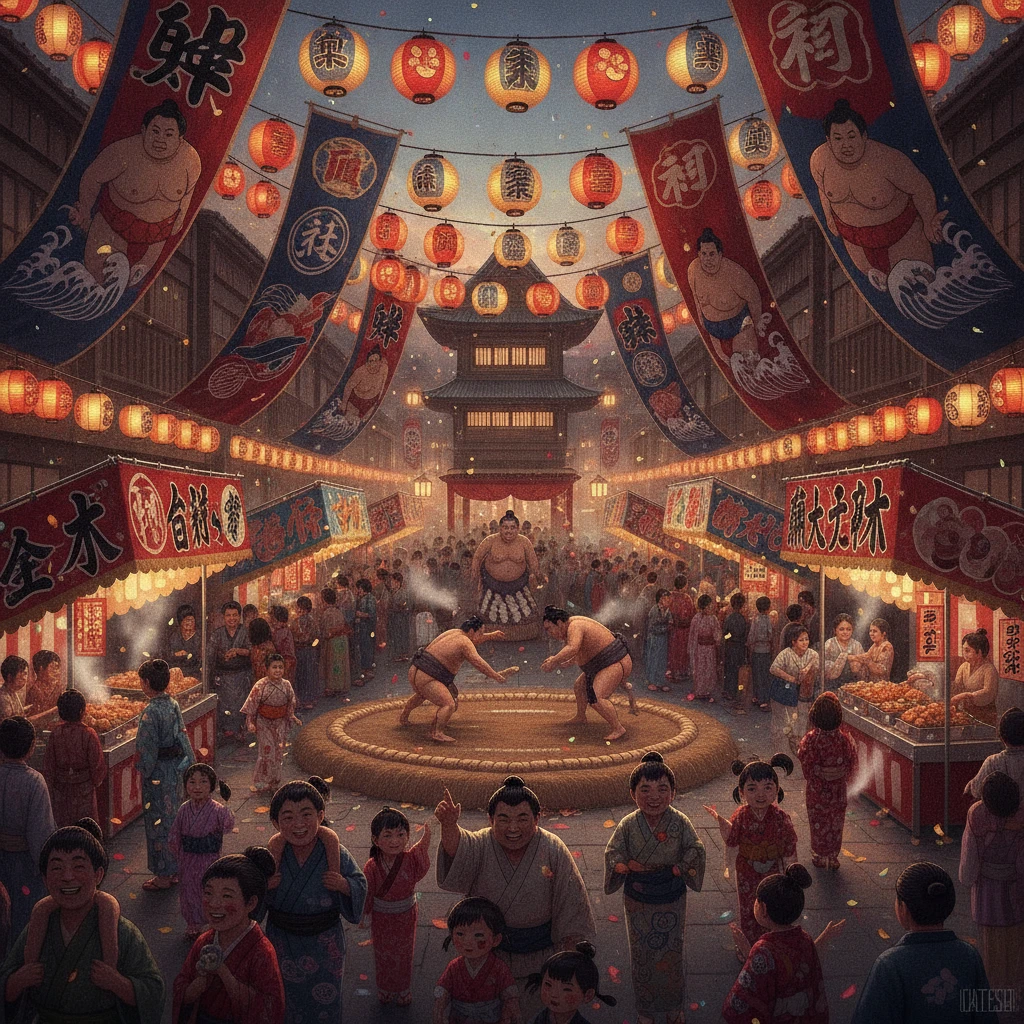
Why You Simply Cannot Miss Sumo Fest This Year
If you think you know cultural festivals, wait until you experience a true sumo fest. I was texting a buddy back in Kyiv just the other day, trying to explain the sheer scale of the energy here, and the best comparison I could make was a massive block party mixed with a heavyweight championship and a spiritual retreat. I still remember my very first time attending. I traveled all the way from Ukraine with zero expectations, thinking I would just see a few guys wrestling. Man, I was so completely wrong. The moment you step off the train and smell the sizzling street food, hear the rhythmic beating of the taiko drums, and see these absolute titans walking the streets in their traditional yukatas, it completely changes your perspective on sports and culture.
As we navigate through 2026, events like these have become massive hubs for international travelers looking for something deeply authentic. It is not just an arena event; it is an all-encompassing community celebration that takes over the entire neighborhood. You get the loud cheers, the vibrant colors of the traditional banners, and a sense of camaraderie with total strangers who are just as awestruck as you are. Trust me, once you catch the vibe of this festival, it becomes an annual craving. So grab a drink, get comfortable, and let me walk you through everything you need to know about navigating the ultimate celebration of the rikishi.
The Core Experience: What You Actually Get
So, what exactly happens at a sumo fest? To put it simply, it is an immersion. You are getting unrestricted access to the lifestyle, diet, and training culture of Japan’s most revered athletes, blended perfectly with a street fair atmosphere. The value here is absolutely insane compared to just buying a ticket to a standard tournament. You get to eat what they eat, watch them practice up close without the usual rigid arena rules, and participate in interactive cultural games.
Let me break down the difference for you real quick so you understand the value proposition. Watching a regular tournament is formal and distant. Watching it on TV is comfortable but lacks soul. But the festival? It puts you right in the middle of the action.
| Experience Type | Atmosphere | Cost & Access |
|---|---|---|
| Standard Tournament | Highly formal, quiet during bouts, distant seating | Expensive, hard to book, limited interaction |
| Sumo Fest | Loud, interactive, festive, highly engaging | Affordable entry, access to food stalls, meet-and-greets |
| Watching on TV | Relaxed, informative commentary, zero crowd energy | Basically free, but you miss the sensory experience |
If you are planning to go, you need a solid strategy to maximize your time. I tell all my friends to follow these specific steps to get the most out of it:
- Secure your accommodations aggressively early. Seriously, the surrounding hotels book out months in advance. Look for guest houses a few train stops away for better rates.
- Learn the basic terminology before you arrive. Knowing words like dohyo (the ring), rikishi (the wrestler), and mawashi (the belt) will instantly earn you nods of respect from the locals.
- Pace your eating like a marathon runner. The food stalls are endless. Do not fill up at the first yakitori stand you see, because you absolutely need to leave room for the main event: the massive bowls of stew.
History and Origins: Deeper Than the Dirt Ring
You cannot fully appreciate the sheer magnitude of this event without understanding where it comes from. We are talking about centuries of tradition that somehow survived modernization.
The Ancient Origins of Sumo Celebrations
Long before there were bright lights, corporate sponsors, or massive stadiums, sumo was fundamentally a religious ritual. Originating as a Shinto practice, it was a way for communities to entertain the gods, known as kami. The earliest forms of these festivals were basically harvest dances and agricultural prayers. Communities would gather, offer food, and stage these monumental wrestling matches to ensure a bountiful harvest. The stomping of the feet? That was literally meant to crush evil spirits residing in the earth. So when you hear that loud thud echoing through the festival grounds, you are hearing an ancient prayer.
Evolution Through the Centuries
Fast forward to the Edo period, and things started looking a bit more like the entertainment spectacle we know today. The samurai class and commoners alike began flocking to street matches to raise money for shrines and temples. This era gave birth to the professionalization of the sport. The festival atmosphere was codified here—food vendors, colorful banners, and the distinct ranking system all began to take shape. It shifted from purely religious ceremonies to massive public block parties that defined the social calendar of ancient Tokyo.
The Modern State of the Festival
Now, in 2026, the festival honors that rich history while welcoming a global audience. The modern iteration strikes a brilliant balance. You still have the Shinto priests purifying the ring with salt, but right outside the arena, you might find digital interactive exhibits, pop-up merchandise shops, and international food fusions. It is a brilliant collision of the deep past and the vibrant present, making it incredibly accessible for people who might not know the intricate rules of the sport but still want to feel the raw energy of the celebration.
The Science Behind the Giants
Let us get a little nerdy for a second. Aside from the culture, the physical reality of what these guys do is mind-blowing. It is easy to look at a 150-kilogram man and just see bulk, but the biomechanics and nutritional science at play are top-tier athletic engineering.
The Biomechanics of the Rikishi
A sumo clash at the initial charge (the tachi-ai) is basically a high-speed car crash. When two massive athletes collide, they are generating literal tons of force. The secret lies in their incredibly low center of gravity and flexibility. These guys can do full splits. Their training focuses heavily on strengthening the lower body to create an immovable base. When they stomp and glide across the clay, they are maximizing friction and leverage. It is a live-action demonstration of Newton’s laws of motion.
Nutritional Science Behind the Chanko Nabe
You cannot talk about this culture without talking about Chanko Nabe, the famous stew that fuels the athletes. People mistakenly think they eat junk food to get heavy. Wrong. Their diet is meticulously structured. The stew is packed with lean proteins, massive amounts of vegetables, and a highly nutritious broth.
- Caloric Density: A single sitting can involve upwards of 4,000 calories, but it comes from whole foods, root vegetables, chicken, and tofu.
- Macro Ratios: The diet is surprisingly balanced, rich in protein for muscle repair and high in complex carbohydrates (like massive sides of rice) to replenish glycogen stores.
- Metabolic Timing: They eat their largest meal after intense morning training and then sleep immediately after. This spike in insulin paired with rest maximizes mass absorption and muscle recovery.
Your Ultimate 7-Day Survival Guide
Alright, you bought your tickets. You are ready. But how do you structure your week? Do not just wing it. Follow my personal 7-day action plan to guarantee you do not miss a single highlight.
Day 1: Arrival and Acclimation
Land, check into your spot, and immediately hit the streets to absorb the vibe. Do not push yourself too hard today. Wander around the perimeter of the festival grounds, check out the colorful banners flapping in the wind, and grab some simple street food like takoyaki. Get a good night’s sleep; you will need the energy.
Day 2: Exploring the Stables
Wake up at 5:00 AM. Yes, I am serious. Head to one of the participating sumo stables (heya) that offer open viewing during the festival. Watching the morning practice (asa-geiko) in total silence, hearing only the slapping of skin and heavy breathing, is a profoundly intense experience. It sets the tone for everything else.
Day 3: Street Food and Chanko Nabe Tasting
Today is all about the palate. The festival grounds feature dozens of stalls hosted by different stables, each serving their unique recipe of Chanko Nabe. Spend the afternoon hopping from stall to stall doing taste tests. Pair it with some local craft beer or green tea. Pace yourself—it is heavy stuff.
Day 4: Cultural Exhibitions and Shinto Shrines
Take a break from the crowds and focus on the spiritual side. Visit the nearby shrines associated with the festival. Watch the ceremonial drum performances and check out the pop-up museums explaining the history of the referee fans (gunbai) and the intricate silk belts.
Day 5: Meet and Greet the Rikishi
This is usually the day the athletes walk the grounds in their casual yukatas to interact with fans. Have your camera ready, but be highly respectful. A simple bow and a polite request for a photo usually get a warm smile. Holding babies for photos is a huge tradition, so expect to see lots of crying infants and laughing giants.
Day 6: The Main Exhibition Matches
This is the climax. Grab your seat early. Exhibition matches during the festival are slightly more relaxed than formal tournaments. You might even see the athletes smiling and showing off a bit of humor in the ring. The energy in the crowd is electric. Cheer loud, pick a favorite, and enjoy the spectacle.
Day 7: Closing Ceremonies and Souvenir Shopping
Wrap up your trip by attending the closing rituals. The final drumbeats signal the end of the celebration. Before you head to the airport, hit the merchandise stalls. Grab some custom tenugui (traditional hand towels) or a banzuke (the beautifully calligraphed ranking sheet) to frame when you get back home.
Myths and Reality
Before you go, let me clear up some massive misconceptions I constantly hear from first-timers.
Myth: It is just a violent, aggressive brawl.
Reality: It is heavily rooted in mutual respect. There is absolutely no trash-talking, and the matches begin and end with deep bows. It is a highly disciplined martial art.
Myth: The athletes are out of shape because they are heavy.
Reality: Underneath the subcutaneous fat is a massive, rock-solid layer of muscle. Their cardiovascular endurance and explosive power easily rival professional American football linemen.
Myth: Foreigners are not welcome at these traditional events.
Reality: The community is incredibly welcoming. As long as you show basic respect for the traditions and follow the rules, locals are thrilled to share their culture with you.
Frequently Asked Questions
1. What should I wear?
Dress comfortably and casually. Slip-on shoes are a massive advantage because you will be taking them off frequently if you enter traditional seating areas or indoor exhibits.
2. Is it safe for young kids?
Absolutely. It is incredibly family-friendly. Kids absolutely love the scale of the athletes and the vibrant street fair atmosphere.
3. Can I take photographs?
Yes, taking photos during the festival and exhibition matches is highly encouraged. Just make sure to turn off your flash during the actual bouts so you do not blind the athletes.
4. How much cash should I bring?
Bring plenty of physical yen. While some larger stalls take digital payments, many of the smaller, authentic food vendors and local souvenir makers operate purely on cash.
5. Do I need to speak the language?
Not strictly. English signage has improved drastically, and translation apps are your best friend. A smile and a polite nod go a long way.
6. What if it rains?
The main matches are under a roof, but the street fair is outdoors. Pack a compact umbrella or a light rain jacket just in case.
7. How early should I book tickets?
Ideally, three to four months in advance. The moment dates are announced, locals and tourists scramble for the best spots.
Listen, attending a sumo fest is one of those bucket-list experiences that actually lives up to the hype. It is loud, it is delicious, and it is culturally profound. Do not just read about it—start looking up flights, secure your spot, and get ready to experience the earth-shaking magic for yourself. See you by the ring!