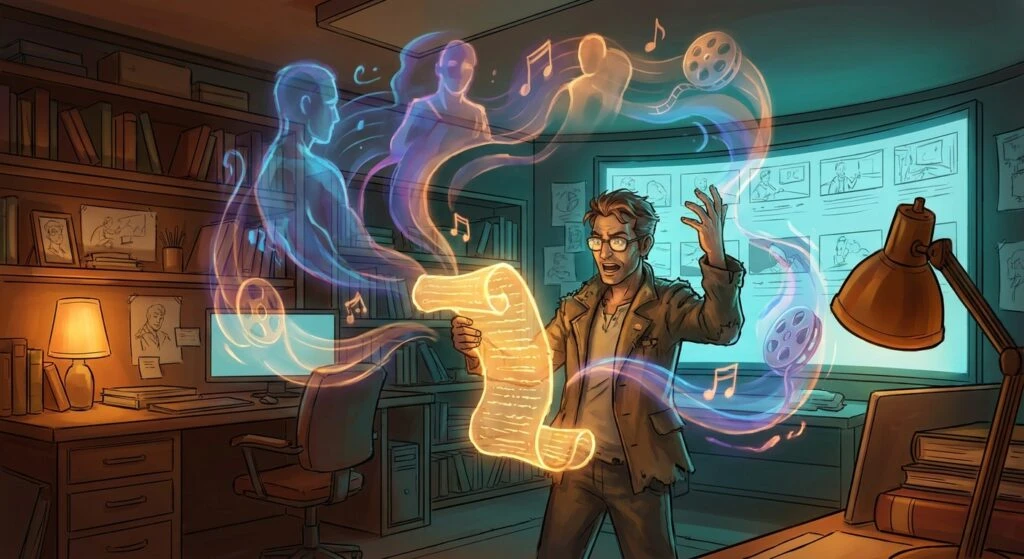


What Actually Happens Inside Studio Verso?
Have you ever wondered why some digital projects completely flop while others built by studio verso instantly grab the market’s attention and refuse to let go? It is a question that keeps a lot of creators and business owners up at night. The truth is, the magic rarely lies in having the biggest budget or the flashiest tools. It comes down to how the entire creative pipeline is structured from day one.
Look, I was sitting with a buddy of mine at a coffee shop right here in Kyiv a few months ago. He was running a promising tech startup but was tearing his hair out over his brand’s digital presence. His website looked like a chaotic spreadsheet, and his bounce rates were through the roof. Users were leaving within seconds. I introduced him to the core operational blueprint used by studio verso. We completely tore down his old setup and rebuilt his strategy using these exact principles. Within a matter of days, his user engagement skyrocketed. People actually stayed on his pages, clicked his buttons, and interacted with his content. It completely changed the trajectory of his brand identity.
Now that we are deep into 2026, user patience is basically at absolute zero. You literally have fractions of a second to make a solid impression before someone swipes away. You need a system that cuts out the noise and focuses purely on high-impact, user-centric execution. That is exactly what we are breaking down right here.
The Core Methodology Explained
So, what exactly makes this approach so effective? The methodology behind studio verso is fundamentally about bridging the gap between raw, wild creativity and rigid, analytical user psychology. Most traditional agencies treat design and function as two completely separate departments that barely talk to each other. One team makes it look pretty, the other team makes it work, and the final result usually feels disjointed. The studio verso framework forces these two elements into a single, unified workflow.
Think about a local specialty coffee roaster trying to sell subscriptions online. If they just use a beautiful but clunky website, people will admire the photos and leave. If they apply this unified framework, the typography, the loading speed, the color contrast, and the checkout flow all work together to guide the customer directly to the purchase button without any mental friction. Another great example is building an interface for a heavy data analytics dashboard. Instead of throwing all the numbers at the user, the layout is paced perfectly to reduce visual clutter while still maintaining robust functionality.
Comparing the Approaches
| Feature Focus | Traditional Workflows | Studio Verso Approach |
|---|---|---|
| Process Mentality | Linear and rigid steps | Agile and highly iterative |
| User Psychology | Treated as an afterthought | Baked into the initial wireframe |
| Testing Phase | Done right before launch | Continuous throughout the build |
| Team Structure | Siloed departments | Cross-functional collaboration |
To really get this working for your own projects, you have to embrace the three main operational pillars:
- Absolute Strategy First: You never touch a design tool or write a single line of code until the entire user intent is mapped out on paper. You must know exactly what the end goal is.
- Seamless Execution Loops: Everything is built in tiny, manageable sprints. You create a small piece, test it immediately, and refine it before moving on to the next massive chunk of the project.
- Data-Driven Refinement: You do not rely on gut feelings. You look at heatmaps, click rates, and actual user feedback to dictate where the design needs to go next.
The Evolution and Background
Origins of the Concept
If you look back roughly ten or fifteen years, the digital landscape was essentially the wild west. People were throwing everything at the wall just to see what would stick. Web pages were heavy, overloaded with unnecessary animations, and totally lacked a clear hierarchy. The initial seeds for the studio verso mentality were planted when a small group of designers realized that pure aesthetics were actually hurting conversion rates. They started asking a very basic question: why are we building things that look great but confuse the actual human beings trying to use them? This marked the beginning of a massive shift from art for art’s sake to art with a strict, measurable purpose.
The Shift Towards Unified Systems
As mobile browsing completely overtook desktop traffic, the stakes got much higher. You simply could not afford to have a sloppy, disorganized user interface on a small screen. Entire agencies had to rethink their workflows from the ground up. This era forced the merging of UI (User Interface) and UX (User Experience) into a single, breathing entity. The studio verso philosophy was born directly out of this pressure cooker. It became entirely focused on minimalism, speed, and intuitive navigation. Creators began throwing away massive, bloated design files in favor of lightweight, modular components that could adapt to anything.
Modern State in 2026
Fast forward to right now, and the landscape is highly automated and extremely competitive. AI tools can generate average designs in seconds, which means human creators have to offer something significantly deeper to stand out. The studio verso approach today is less about drawing pixels and more about orchestrating holistic digital experiences. It is about understanding the exact emotional trigger a user feels when they interact with a specific digital environment. The focus has completely shifted to hyper-personalization, accessibility, and creating digital spaces that feel as natural to navigate as walking through your own home.
The Science Behind the Strategy
The Mechanics of User Retention
You might think that keeping someone on your page is just about having good content, but it is heavily rooted in cognitive psychology. The human brain is constantly looking for shortcuts to save energy. When a user lands on a project built with the studio verso framework, their brain doesn’t have to work hard to figure out what to do. This is directly tied to something called Hick’s Law, which basically states that the more choices you give a person, the longer it takes for them to make a decision. By ruthlessly cutting out unnecessary buttons, links, and distractions, you dramatically reduce the user’s cognitive load. They instantly know where to click because you have subconsciously guided their eyes using contrast, spacing, and typography.
Technical Architecture and Performance
Beyond psychology, there is a hard, technical foundation that makes this all possible. Even the most beautiful layout will fail if the underlying mechanics are sloppy. Modern digital interactions rely heavily on asynchronous loading, which simply means that the most important parts of a screen load instantly while the heavier background elements load invisibly behind the scenes. This gives the illusion of a zero-wait experience. You also have F-pattern scanning, a proven concept showing that users read digital screens in an F-shaped pattern, scanning the top horizontal line, moving down a bit, scanning across again, and then dragging their eyes down the left side.
- Visual Processing Speed: The human brain processes images and visual layouts up to 60,000 times faster than raw text. If your visual hierarchy is off, the user gets confused instantly.
- The 100-Millisecond Rule: Interactions that happen within 100 milliseconds are perceived as completely instantaneous by the human brain. Anything slower feels like lag.
- Fitts’s Law Application: The time it takes to move to a target is a function of the distance to the target and the size of the target. This means primary call-to-action buttons must be large and placed perfectly in the user’s natural thumb-path on mobile devices.
- Contrast Ratios: Scientific testing proves that strict adherence to specific color contrast standards not only helps visually impaired users but increases reading comprehension across the board for everyone.
The 7-Day Implementation Plan
Reading about the theory is great, but getting your hands dirty is what actually moves the needle. If you want to integrate the studio verso framework into your own workflow, you need a highly structured, aggressive schedule. Here is a step-by-step, seven-day roadmap to completely overhaul how you build your next project.
Day 1: The Ideation Phase
Start with a massive brain dump. Get a whiteboard or a giant digital canvas and map out exactly who you are building this for. You need to define the absolute core problem you are solving. Do not draw any screens today. Just write down user personas, define the ultimate business goal, and list out the emotional responses you want to trigger. Clarity here dictates the success of the entire week.
Day 2: Mapping the User Journey
Now, you chart the path. Where does the user enter your digital space, and exactly what steps do they need to take to reach the final goal? Create a flowchart. Keep it incredibly simple. If it takes more than three clicks to get to the most important part of your project, your path is too complicated. Brutally cut out any unnecessary steps.
Day 3: Wireframing the Skeleton
It is time to build the bones. Using simple gray boxes and black text, draft the layout of your main pages or screens. Do not worry about colors, fonts, or images. The studio verso method demands that the structure works purely on its own functional merits. If the page doesn’t make sense as a bunch of gray squares, adding pretty colors tomorrow won’t save it.
Day 4: Visual Language and Typography
This is where the personality comes in. Choose a strict color palette of no more than three primary colors. Select two highly readable fonts—one for headers, one for body text. Apply these choices to your gray wireframes. You will start to see the energy of the project come to life. Keep everything completely consistent. A button on page one should look exactly like a button on page five.
Day 5: Prototyping Interactions
Static pages are boring. Today, you link everything together. Create a clickable prototype. Define how menus slide in, how buttons react when hovered over, and how transitions feel. The key here is subtlety. You want animations to guide the user’s eye, not distract them with chaotic motion. Everything should feel snappy and responsive.
Day 6: User Testing and Feedback Loop
Put your prototype in front of real human beings. Do not explain anything to them. Just tell them to complete a specific task, like signing up for a newsletter or finding a specific piece of information. Watch where they get stuck. Watch where they hesitate. Take vicious notes. This step is usually where your ego gets bruised, but it is the most critical part of the entire week.
Day 7: Final Polish and Launch
Take all the feedback from Day 6 and make the necessary tweaks. Fix the confusing buttons, adjust the spacing, and double-check your mobile responsiveness. Run a final performance audit to ensure load times are blazing fast. Once everything is perfectly dialed in, hit the launch button. But remember, launch is just the beginning of continuous iteration.
Debunking Common Myths
There is a lot of noise out there about how professional digital operations actually work. Let’s clear up some of the biggest misconceptions right now.
Myth: You need a massive, corporate-level budget to apply the studio verso principles effectively.
Reality: Absolutely not. The core of this methodology is about structure, psychology, and logic. You can sketch these frameworks on a napkin for free. It is a mindset, not an expensive software subscription.
Myth: This highly structured approach kills raw creativity and makes everything look boring and identical.
Reality: Constraints actually breed better creativity. By locking down the functional mechanics early, you free up your mental energy to make the visual aesthetics truly spectacular and highly unique without breaking the user experience.
Myth: Fast execution sprints mean you are sacrificing quality for speed.
Reality: Iterative sprints prevent you from wasting weeks building the wrong thing. You build fast, test fast, and refine constantly. This actually guarantees a significantly higher quality end product than dragging out a project for six months.
Myth: High-end design is just about making things look as pretty and trendy as possible.
Reality: Pretty design that fails to convert users is entirely useless. True professional design is visual problem-solving. Aesthetics are just the very final layer wrapped around a deeply logical core.
Frequently Asked Questions
Is studio verso suitable for small businesses?
Yes, absolutely. Small businesses actually benefit the most because it prevents them from wasting precious capital on things that do not directly drive user engagement or sales.
How long does the initial planning phase take?
It depends on the scale, but generally, you should spend about 30% of your total project timeline strictly on planning, mapping, and wireframing before touching any final designs.
Do I need coding skills to use this framework?
Not at all. This is a conceptual and structural methodology. You can apply it using no-code tools, simple website builders, or even standard graphic design software.
What makes this different from just using regular templates?
Templates force your unique content into a pre-existing box. This methodology builds a custom, optimized box specifically around the exact needs of your content and your unique audience.
Can I apply this mindset to print media?
Definitely. While it was heavily popularized in the digital space, the concepts of visual hierarchy, cognitive load reduction, and clear calls-to-action work phenomenally well for magazines, posters, and physical packaging.
What software is best for this type of workflow?
Tools like Figma, Sketch, or Adobe XD are industry standards because they allow for rapid wireframing, seamless prototyping, and extremely easy sharing for user testing.
Is it expensive to maintain once launched?
Actually, it is much cheaper. Because the system is built on logical, modular components from the start, updating a feature or adding a new page later takes a fraction of the time it would in a chaotic, unstructured build.
Listen, mastering the digital space is entirely within your control if you stop relying on guesswork and start relying on proven systems. By fully adopting the studio verso mindset, you are essentially guaranteeing that your next project will not only look stunning but will perform like an absolute machine. Stop waiting for the perfect moment, grab a whiteboard, start mapping out your user journeys, and watch how quickly your creative outputs dominate the market!