

What Actually Happened with the stc shooting?
Have you seen the chaotic threads about the stc shooting circulating on your timeline today? It is honestly wild how quickly misinformation spreads faster than official facts whenever a major incident hits a busy public area. We absolutely need to look past the panic-inducing headlines and understand the actual public safety protocols, how communities respond under pressure, and what this all means for everyday retail environments.
Sitting here in Kyiv, we are unfortunately pretty accustomed to sudden disruptions in public spaces. You will be sitting at a local cafe sipping an espresso, and suddenly the air raid siren blares out from the app on your phone. That specific jolt of adrenaline—the rapid shift from a totally normal, mundane afternoon to a state of high alert—is an emotional shift I deeply understand. So, when news of a severe emergency breaks at a massive international hub like Scarborough Town Centre, that ripple effect of anxiety is universal. My phone immediately started buzzing with messages from friends overseas asking if everyone they knew was okay. It just goes to show how interconnected our daily safety concerns really are. We are going to break down exactly what modern public safety looks like right now, completely skipping the sensationalized drama and focusing purely on the mechanics of emergency management and how vast spaces are adapting to keep people secure.
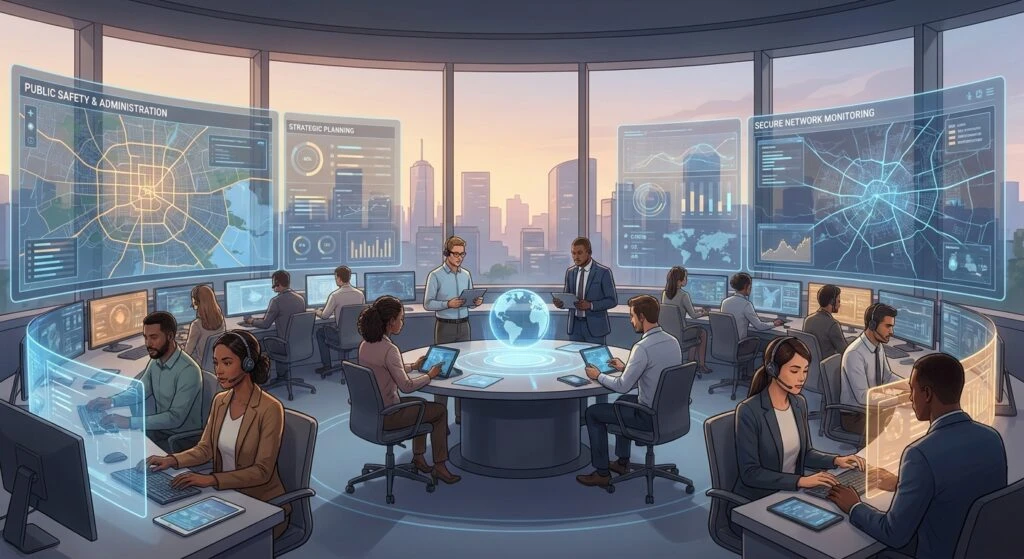
Let’s talk about the immediate realities of a massive retail lockdown. The noise on social media is always deafening, but the actual police dispatch and facility management response is a highly orchestrated machine. When a situation escalates, the immediate priority is isolating the threat and guiding civilians to secure, fortified zones away from the main corridors. Think about the sheer scale of a modern shopping center. Millions of square feet, multiple levels, blind corners, and thousands of distracted people. You cannot simply shout at everyone to run; that creates a dangerous stampede.
To really grasp how authorities manage these sprawling emergencies, look at the systematic approach they use today. The framework is strictly designed to minimize collateral panic while maximizing the speed of first responders.
- Immediate Threat Isolation: Security teams instantly lock down automated doors to partition the mall into smaller, contained zones, preventing a threat from moving freely.
- Digital Perimeter Establishment: Police instantly geofence the area, pushing emergency alerts directly to the cell phones of anyone within a one-mile radius to keep bystanders away.
- Coordinated First Responder Integration: Paramedics and tactical units stage at pre-determined, secure rally points rather than rushing blindly into a chaotic parking lot.
The contrast between how we handled emergencies a decade ago and how we handle them now is staggering.
| Emergency Feature | Past Protocols (2010s) | Current Protocols (2026) |
| Alert System | Manual PA Announcements | Automated Geofenced Push Alerts |
| Surveillance | Reactive CCTV Review by Guards | AI-Assisted Anomaly and Weapon Detection |
| Evacuation | Mass chaotic exit through main doors | Phased, zone-by-zone guided extraction |
A prime example of this value proposition is the implementation of AI anomaly detection. Instead of waiting for a distressed shopper to call emergency services, modern camera systems can identify the visual signature of a weapon or the sudden, erratic running of a crowd, automatically triggering a lockdown before a human operator even touches a button. Another massive improvement is the decentralized communication network. Store managers now have direct, encrypted radio links to central security, meaning a single clothing store can quietly drop its security grates and move shoppers to a back stockroom without waiting for a mall-wide announcement.
Origins of Retail Security
If you think back to the malls of the 1980s and 1990s, security was largely theatrical. You had a few unarmed guards walking the concourse, mostly there to give directions to the food court or chase away teenagers loitering by the arcade. The concept of an active threat in a suburban shopping center was practically science fiction. Security architectures were entirely built around loss prevention—stopping shoplifters and preventing vandalism. There was absolutely no structural planning for high-intensity, rapid-unfolding crises. The layout of these buildings, with their massive open atriums and centralized glass elevators, was designed for visibility and commerce, completely ignoring the concepts of cover, concealment, or rapid evacuation.
Evolution Following Global Incidents
Everything fundamentally shifted following the tragic global events of the early 2000s and 2010s. The industry realized that soft targets—places where large civilian populations gather with minimal access control—required a completely new philosophy. We saw a massive pivot in structural design and protocol. Facility managers started consulting with counter-terrorism experts and tactical police units to redesign their spaces. They introduced reinforced safe rooms disguised as back-office storage. They changed the materials used in structural pillars to provide actual ballistic protection rather than just decorative flair. The entire doctrine shifted from “observe and report” to “contain and protect.”
Modern State of Facility Protection
By the time we hit the current year, 2026, the technology backing up the physical security guard is genuinely staggering. We are no longer relying on a guy with a flashlight. Malls operate essentially like smart cities. The HVAC systems can be localized and shut down to prevent the spread of smoke or airborne agents. Acoustic sensors mapped across the ceilings can instantly triangulate the exact location of a loud noise, distinguishing between a dropped pallet in the food court and actual gunfire. This evolution has turned retail environments into highly responsive, self-protecting ecosystems that prioritize human life above all else.
The Science of Crowd Dynamics
When an incident like the stc shooting makes headlines, the underlying mechanics of what happens to the human brain and the collective crowd are deeply fascinating and terrifying. Human beings in a state of sudden terror experience something called “amygdala hijack.” Your brain’s frontal lobe—the logical, decision-making part—essentially shuts down, handing the wheel over to raw survival instincts. This is where crowd crush incidents happen. A group of heavily panicked people will instinctively move toward the exit they entered from, completely ignoring a perfectly viable emergency fire exit just ten feet away. This phenomenon, known as “cognitive tunneling,” makes managing an evacuation incredibly dangerous.
Technical Emergency Communication Systems
To combat this chaotic human psychology, engineers have developed highly technical emergency communication infrastructures. When a massive event kicks off, localized cell towers often become overwhelmed as thousands of people try to livestream or call loved ones simultaneously. This creates a dangerous bottleneck for first responders who rely on those same networks.
- FirstNet Integration: Emergency responders use dedicated, prioritized broadband networks that cannot be slowed down by civilian traffic.
- Acoustic Triangulation: Sensors measure the exact millisecond a sound wave hits different nodes, calculating the exact spatial origin of a threat.
- Automated Geofencing: Telecom companies dynamically draw a digital fence around the incident, ensuring that emergency instructions bypass standard SMS delays and flash directly on phone screens.
- Asymmetrical Encryption: Facility radios use rolling encryption to ensure that bad actors cannot listen in on security dispatch frequencies to track guard movements.
Day 1: Map Your Exits
You need to start making situational awareness a completely passive habit. The next time you walk into a massive retail space, take exactly five seconds to locate two exits that are not the main doors you just walked through. Look for the illuminated red exit signs down the service corridors. Mental mapping saves crucial seconds when the crowd suddenly panics.
Day 2: Build a Communication Plan
Sit down with your family and establish a hard-and-fast emergency protocol. If cell networks go down or get jammed during an incident, trying to call each other is useless. Pick a specific rally point outside the building—like a specific bus stop or a nearby restaurant—where everyone knows to go if you get separated during a sudden evacuation.
Day 3: Emergency First Aid Familiarization
You do not need to become a paramedic, but you should absolutely know how to stop massive bleeding. Look up basic tutorials on how to use a tourniquet and how to pack a wound. In the immediate aftermath of a severe emergency, the people who save lives are usually the everyday bystanders who take action before the ambulances are cleared to enter the warm zone.
Day 4: Digital Hygiene and Alert Setup
Go into your smartphone settings and ensure that severe emergency alerts and public safety warnings are toggled on. Far too many people turn these off because they find Amber Alerts annoying, but this is the exact system authorities use to tell you to shelter in place. Don’t let a minor annoyance compromise your safety.
Day 5: Situational Awareness Practice
Start practicing the “baseline” technique. When you sit in a food court, put your phone down for two minutes and just watch the baseline behavior of the crowd. Notice how people normally walk, talk, and interact. Once you understand the baseline, any sudden anomaly—like someone sprinting aggressively or a sudden wave of silence—will immediately trigger your radar.
Day 6: Understanding Cover vs. Concealment
This is a critical survival concept. Concealment hides you from view, like ducking behind a clothing rack or a thin drywall partition. Cover actually stops a threat, like hiding behind a thick concrete pillar, a heavy solid oak door, or the engine block of a car. Train your brain to identify actual cover when scanning a room.
Day 7: Community Support and Recovery
Physical safety is only the first step; emotional resilience is the long game. If your local community experiences a severe trauma, focus on supporting local businesses and checking in on your neighbors’ mental health. Share official, verified information only, and actively push back against the rumor mill that always follows a tragedy.
Myth: Playing dead is the best survival strategy during an active threat.
Reality: This is a devastatingly dangerous misconception. Law enforcement and survival experts universally recommend the “Run, Hide, Fight” protocol. Your absolute first priority is to evacuate the area completely. If you cannot run, you barricade and hide. Playing dead leaves you entirely vulnerable and at the mercy of the situation.
Myth: Gunfire indoors sounds exactly like it does in action movies.
Reality: Because of the complex acoustics of indoor spaces, real gunfire often sounds like heavy wooden pallets dropping, construction equipment backfiring, or balloons popping. It rarely has that cinematic, echoing boom. Do not wait for verification; if a crowd reacts to a loud noise, move.
Myth: You should immediately call the police from your cell phone.
Reality: If you are actively hiding and the threat is nearby, making noise can give away your position. Keep your phone absolutely silent. Texting 911 is now a functional feature in many regions, allowing you to quietly relay your location without speaking a single word.
What triggers a mall lockdown?
Lockdowns are typically initiated by central security when there is a confirmed physical threat, severe weather event, or at the direct request of local law enforcement tracking a suspect in the immediate vicinity.
How long do these investigations take?
Initial containment happens in minutes, but securing a massive property can take several hours. Forensic investigations following a major incident can lock down a retail center for days to preserve the integrity of the scene.
Can I retrieve my car from the parking lot?
During an active emergency, absolutely not. The parking lots are immediately cordoned off for emergency vehicle staging and suspect containment. You will have to wait for official police clearance, usually the next day.
What is the run, hide, fight protocol?
It is the standard civilian survival doctrine. First, run away from the threat if the path is clear. If evacuation is impossible, hide and barricade yourself securely. As an absolute last resort when your life is in immediate danger, fight back with overwhelming aggression.
Are metal detectors coming to malls?
While traditional metal detectors create logistical bottlenecks, many modern facilities are currently testing advanced, frictionless AI scanners that passively detect dense metallic objects on people as they walk through the doors without stopping.
How to manage anxiety after an incident?
Step away from the doomscrolling. Limit your exposure to social media speculation, stick to verified news sources, and focus on grounding exercises. Speak with a professional counselor if the anxiety persists.
Where to find official updates?
Always bypass random Twitter accounts. Rely directly on the official social media feeds of the local police department, city emergency services, and the verified corporate account of the facility itself.
Dealing with the reality of sudden public emergencies is never easy, but being educated replaces paralyzing fear with actionable power. By understanding how the stc shooting scenario is managed by professionals and taking your own situational awareness seriously, you protect yourself and your community. Stay sharp, verify your information, and always keep your head on a swivel when you are out there.