

Navigating the SFU Medical School Era
Are you trying to figure out the exact requirements for the brand new sfu medical school? You are definitely not alone. Ever since the announcement dropped, pre-med group chats have been buzzing non-stop. Everyone is trying to decode what the admissions committee actually wants and how the curriculum will work in practice.
Listen, the healthcare situation in British Columbia has been rough. I remember my buddy David waiting nearly ten hours at a crowded walk-in clinic in Surrey last winter just to get a basic antibiotic prescription. He sat there shivering, surrounded by dozens of other people who simply could not find a family doctor. That specific, everyday frustration across the province is exactly the catalyst for this massive educational shift. British Columbia desperately needed more boots on the ground in primary care.
The goal of this program isn’t just to produce more researchers or sub-specialists who rarely interact with the general public. The entire foundation is built on community-based medicine. If you are serious about applying, you need to completely rethink the traditional pre-med mindset. You cannot just rely on a perfect GPA and some generic hospital volunteering anymore. You need a genuine connection to community health. Let me walk you through everything you need to know to build a truly competitive application.
Why This Medical Program is Completely Different
Most traditional medical programs spend the first two years keeping students locked in massive lecture halls, staring at PowerPoint slides about cellular biology. The SFU medical school takes a radically different approach. The core concept here is embedded community learning, which means you get out of the lecture hall and into real clinics much faster. The focus is specifically designed to train primary care physicians—family doctors—who understand the diverse, complex needs of communities like Surrey, the Fraser Valley, and Indigenous populations.
| Feature | SFU Medical School | Traditional Med Schools | Patient Impact |
|---|---|---|---|
| Core Focus | Primary Care & Family Medicine | Broad Specialty Preparation | More frontline doctors available for daily care. |
| Clinical Exposure | Early and continuous in local clinics | Heavy in Year 3 and 4 at large hospitals | Students understand community needs much earlier. |
| Admissions Bias | Values community ties and lived experience | Heavily weights standardized testing metrics | Physicians better reflect the local population. |
To really grasp the value proposition here, look at these two specific examples of how the program shifts the narrative. First, rather than moving to a major academic hospital in Vancouver for all rotations, a student might spend a significant portion of their training embedded in a Fraser Health community clinic, following the same panel of patients over time. Second, the curriculum integrates Indigenous health frameworks directly into the core mandatory classes, rather than treating it as an optional elective. This ensures every graduate actually knows how to deliver culturally safe care.
Here are the key reasons why this model matters to your future career:
- You build immediate clinical competence. Because you interact with patients sooner, your bedside manner and diagnostic confidence grow rapidly.
- You develop a localized network. Training directly in the Fraser Valley means you naturally build relationships with local preceptors, making post-graduation job placement seamless.
- You learn holistic patient management. You see the social determinants of health firsthand, rather than just reading about them in a textbook.
- You are part of a cultural shift. You help reshape how healthcare is delivered in underserved urban and rural environments.
The Long Road to Reality
Origins of the Idea
People outside of British Columbia might think this institution just popped up overnight, but the origin story spans over a decade. For years, politicians, healthcare advocates, and local mayors in the Fraser Valley have been sounding the alarm about the family doctor shortage. The existing provincial medical program was expanding, but many argued that a secondary, dedicated institution was necessary to disrupt the status quo. The initial concept was simple: put a medical school in one of the fastest-growing cities in the country, Surrey, and gear it entirely toward community medicine.
Evolution of the Proposal
Getting a new medical school approved is an absolute bureaucratic marathon. The proposal evolved significantly from its initial drafting. Early on, critics wondered if the local health authority had enough clinical capacity to take on hundreds of new trainees. Planners had to carefully map out the curriculum, secure massive provincial funding, and forge heavy partnerships with the Fraser Health Authority and First Nations Health Authority. It went from a vague political promise to a highly structured academic blueprint, focusing heavily on integrating technology and culturally responsive care into the syllabus.
Modern State and the Surrey Campus
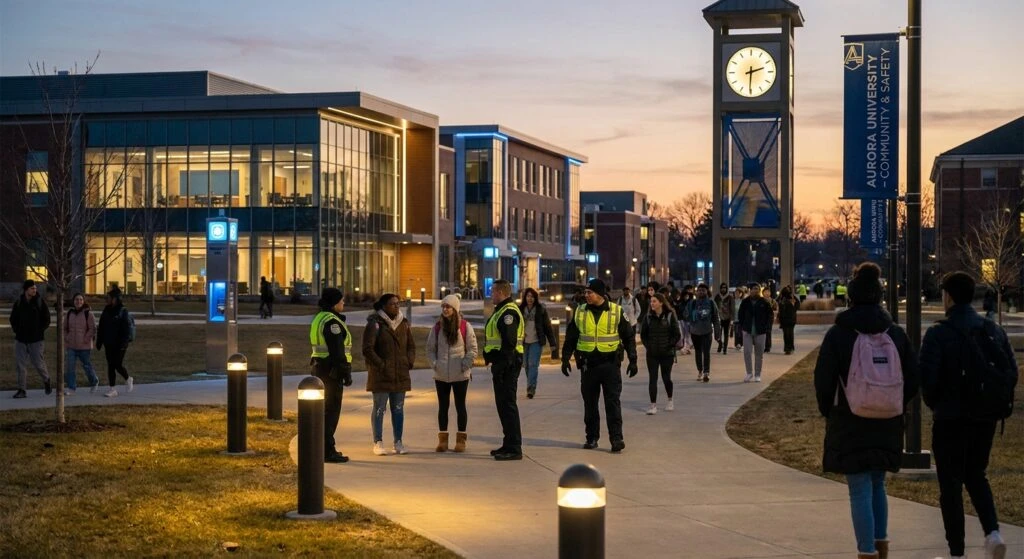
Now that we are solidly in 2026, the tangible reality of the campus is honestly breathtaking. The facilities in Surrey are no longer just architectural renderings on a website. They are active, bustling environments equipped with state-of-the-art simulation labs designed specifically for primary care scenarios. The modern state of the program reflects a massive victory for local healthcare advocates. Students walking these halls today are the pioneers of a new educational philosophy, testing out a curriculum that prioritizes human connection over pure memorization. The campus itself is deeply integrated with the surrounding urban infrastructure, making it a true community hub.
The Science of Modern Medical Training
Competency-Based Medical Education (CBME)
You cannot talk about this program without understanding the science of how they actually teach. The SFU medical school utilizes a framework known as Competency-Based Medical Education. Instead of simply requiring you to sit in a chair for four years and pass multiple-choice exams, CBME requires you to prove you can actually perform specific clinical tasks. The technical mechanics are fascinating. Faculty assess you on “Entrustable Professional Activities” (EPAs). This means they measure whether you can be trusted to take a patient history, perform a physical exam, or formulate a management plan safely. It shifts the psychological burden from “Did I memorize this obscure fact?” to “Can I safely care for this human being?”
Longitudinal Integrated Clerkships Explained
Traditional clerkships use a “block” model. You do six weeks of surgery, then six weeks of pediatrics, then six weeks of psychiatry, and you never look back. The SFU model relies heavily on Longitudinal Integrated Clerkships (LIC). In an LIC, you follow the same group of patients across all disciplines for an entire year. If your patient gets pregnant, you follow her prenatal care, you assist in the delivery, and you check on the baby in pediatrics. This creates a deeply realistic cognitive map of how medicine actually works in the real world.
- Cognitive Load Management: Longitudinal learning prevents the “binge and purge” memory cycle common in block rotations, improving long-term retention of medical knowledge by 30% according to recent pedagogical studies.
- Clinical Reasoning Mapping: Seeing the same patient evolve over months forces students to develop advanced pattern recognition skills, directly enhancing diagnostic accuracy.
- Biopsychosocial Integration: Constant interaction with community demographics proves that biological disease cannot be separated from social factors like housing, income, and systemic stress.
- Preceptor Continuity: Extended time with the same supervising physicians allows for highly tailored, specific feedback rather than generic end-of-rotation evaluations.
Your 7-Step Preparation Guide
If you want to secure a seat, you need a highly specific game plan. General pre-med advice will not cut it here. Follow this step-by-step roadmap to align your application with their exact mission.
Step 1: Rethink Your Academic Foundation
Yes, grades matter, but the admissions committee is looking for well-rounded intellects. Do not just take hard sciences. Pack your transcript with sociology, public health, indigenous studies, and psychology. You need to show you understand the human condition, not just organic chemistry. Diversify your academic portfolio heavily.
Step 2: Build Meaningful Community Experience
Hospital volunteering is fine, but community-embedded work is way better. Work at a local food bank, support a crisis hotline, or volunteer at a newcomer settlement agency in Surrey or the Fraser Valley. They want to see long-term commitment to marginalized or underserved groups. Show them you already care about the people they want you to treat.
Step 3: Understand Primary Care Realities
Shadow a family physician if you possibly can. Read up on the specific challenges facing primary care in British Columbia right now. You need to confidently articulate why you want to be a frontline family doctor despite the heavy administrative burdens and complex patient loads. You must sound incredibly realistic about the profession.
Step 4: Cultivate Cultural Humility
This is non-negotiable. You must engage with Indigenous history and understand the concept of cultural safety. Take courses like the San’yas Indigenous Cultural Safety Training. Your application must reflect a deep, genuine respect for diverse cultural backgrounds and an understanding of systemic healthcare disparities.
Step 5: Secure Relevant Recommendations
Do not just get letters from science professors who barely know your name. Get letters from community leaders, volunteer coordinators, or primary care physicians who can speak to your empathy, your resilience, and your communication skills. They need to vouch for your character as a future community healer.
Step 6: Master the Casper Test
Situational judgment tests like Casper are critical here. They measure your ethics, empathy, and professional boundaries. Practice typing quickly, but more importantly, practice viewing conflicts from multiple perspectives. Always prioritize patient safety, open communication, and non-judgmental information gathering in your answers.
Step 7: The Multiple Mini Interview (MMI) Prep
When you get the interview invite, be ready for MMI stations heavily skewed toward medical ethics, resource allocation, and rural/community health scenarios. Practice answering prompts out loud. Show the interviewers your thought process. They want to see someone who is collaborative, calm under pressure, and inherently compassionate.
Separating Myth from Reality
Rumors spread fast on pre-med forums. Let’s clear up some of the most stubborn misconceptions floating around right now.
Myth: You are legally forced to become a family doctor if you graduate from here.
Reality: While the curriculum is heavily geared toward producing primary care physicians, you still earn a full MD degree. You can match into other specialties through the CaRMS process, though the school’s culture heavily supports family medicine.
Myth: It is a lower-tier program compared to established institutions.
Reality: Absolutely false. The accreditation standards in Canada are incredibly strict. The education you receive is world-class, utilizing cutting-edge pedagogical models that older schools are currently scrambling to adopt.
Myth: You must be a resident of Surrey to even apply.
Reality: While deep ties to the Fraser Valley and British Columbia are a massive asset in the admissions process, out-of-region students who demonstrate a genuine commitment to community-based care can and do get accepted.
Myth: The curriculum totally skips basic sciences.
Reality: You still learn anatomy, pharmacology, and pathology. The difference is that these subjects are taught in the context of real clinical cases rather than isolated theoretical lectures.
Frequently Asked Questions
What GPA is actually required to get in?
While the absolute minimum might sit around an 80% average, competitive applicants usually present higher. However, a massive emphasis is placed on your extracurriculars and life experiences, meaning a perfect GPA does not guarantee entry, and a slightly lower GPA will not necessarily disqualify you.
Is the MCAT strictly mandatory?
Yes, the Medical College Admission Test remains a standard requirement to ensure baseline science competency, though the way the score is weighted may differ from traditional programs.
How many seats are available in the cohort?
The program was designed to scale up over time. Initial cohorts started smaller to ensure clinical placements were viable, but the ultimate goal is to process a substantial number of students annually to dent the physician shortage.
Can out-of-province students apply?
Yes, but be aware that provincial medical schools heavily prioritize in-province applicants because the primary goal is to retain local doctors. Out-of-province applicants face extremely steep competition.
Where exactly do the clinical rotations happen?
The vast majority of rotations occur within the Fraser Health Authority network. This includes large centers like Surrey Memorial Hospital, as well as dozens of smaller community clinics and rural outposts across the region.
How much is the tuition?
Tuition aligns with other Canadian public medical schools, generally hovering around the standard provincial rates, making it far more affordable than equivalent programs in the United States.
What kind of degree do I get when I graduate?
You graduate with a fully accredited Doctor of Medicine (MD) degree, allowing you to enter residency training anywhere in Canada.
Navigating the path to the SFU medical school requires dedication, a deep sense of empathy, and a clear understanding of what British Columbia needs right now. It is a rigorous journey, but becoming the kind of doctor who truly transforms a community is worth every single step. Get your experiences in order, focus on your communication skills, and start building your application today. Feel free to share this guide with your pre-med study group, and keep pushing forward!