

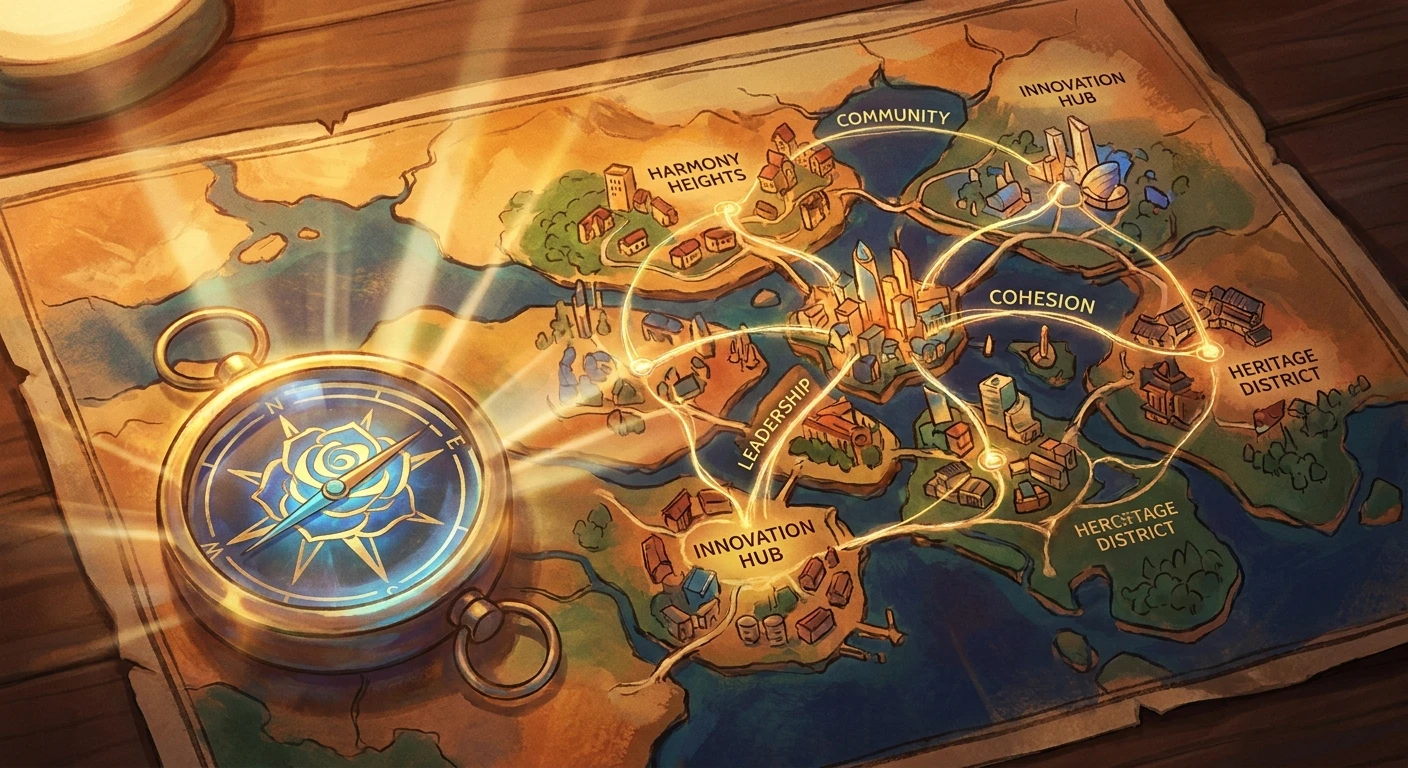
Why We Desperately Need Civic Role Models Today
Have you ever stopped to wonder how civic role models manage to pull fractured communities together with just a few coordinated actions? These individuals operate as the quiet engines of social cohesion, stepping up to address local gaps when formal systems fall short. The concept of community leadership is not just a theoretical ideal; it is a very practical, measurable mechanism that keeps neighborhoods functioning, resources flowing, and vulnerable populations protected. When a crisis hits, or even during the mundane challenges of daily civic life, the presence of dedicated individuals who model responsible citizenship completely alters the outcome for everyone involved. They provide a blueprint for action that others can easily follow, turning passive bystanders into active participants. We need these figures because institutional policies often lack the agility required to solve hyper-local problems efficiently. By taking the initiative, modeling ethical behavior, and organizing resources, these leaders create a ripple effect. This ripple effect lowers the barrier to entry for others, proving that you do not need formal authority to create structural improvements. They show us that taking responsibility for our shared spaces is both achievable and deeply rewarding, fostering a culture where collective well-being takes priority over isolated individualism.
The Tangible Impact of Everyday Leadership
To truly grasp the value these individuals bring, we have to look past the rhetoric and examine the hard metrics of community health. A neighborhood with visible, active leaders consistently demonstrates better resilience, faster emergency response times, and higher overall satisfaction among residents. The dynamic is straightforward: action inspires action. When people witness a neighbor organizing a cleanup, petitioning for safer crosswalks, or establishing a mutual aid fund, the abstract concept of duty becomes a concrete reality. This visibility is crucial. It dismantles the common excuse that one person cannot make a difference. The benefits are highly structural. For example, local governments often rely on these grassroots figures to understand what the community actually needs, bypassing bureaucratic delays. Here is a breakdown of how different levels of engagement impact a neighborhood:
Read also: The Calgary Mayor: Complete Guide to City Leadership; Public Safety Minister: Essential Duties & Impact.
| Engagement Level | Action Characteristics | Impact on Community |
|---|---|---|
| Passive Resident | Follows laws, pays taxes, but avoids community groups | Maintains baseline stability but offers no growth or crisis resilience |
| Occasional Volunteer | Participates in organized events a few times a year | Provides necessary labor for existing projects and temporary boosts |
| Civic Role Model | Proactively identifies issues, organizes solutions, and mentors others | Drives systemic improvements, secures funding, and builds lasting networks |
Beyond these categories, the value proposition of stepping into a leadership role offers massive returns for both the individual and the collective group. If you want to identify the effective leaders in your area, look for these defining characteristics:
- Consistent Accountability: They follow through on their commitments, no matter how small, building an unshakeable foundation of trust with their neighbors.
- Inclusive Communication: They actively seek out voices that are usually marginalized, ensuring that solutions benefit the entire demographic rather than a select few.
- Resource Magnetism: Through their proven track record, they naturally attract funding, volunteers, and municipal support, acting as a reliable hub for resource distribution.
The Origins of Civic Duty
The philosophical foundation of community responsibility stretches back to ancient civilizations. In early Athenian democracy and the Roman Republic, the concept of civitas bound individuals to the state and to each other. Participation in public life was not merely an option; it was the defining feature of a free citizen. Those who took the lead in public assemblies or funded communal infrastructure were celebrated as the ultimate examples of civic virtue. This early framework established the idea that personal success was inextricably linked to the prosperity of the broader community. The expectation was that those with capability would naturally guide and support the collective effort.
The Evolution of Community Leadership
As societies grew larger and more complex, the nature of this role shifted. During the industrial revolution, rapid urbanization created harsh living conditions that formal governments were utterly unprepared to manage. In response, labor organizers, settlement house pioneers, and early civil rights advocates emerged as the new standard-bearers for community action. They formed mutual aid societies, unionized workers, and built the foundations of the modern social safety net. These figures operated outside of official government channels, proving that massive structural change often originates from the grassroots level. Their methods relied heavily on interpersonal trust and the ability to mobilize large groups of disenfranchised people through shared grievances and shared hopes.
The Modern State of Civic Engagement
Today, the landscape of community action is highly decentralized and heavily augmented by technology. Digital platforms allow modern leaders to organize protests, crowdfund local projects, and distribute information at unprecedented speeds. However, the core requirement remains exactly the same: the necessity for trustworthy individuals to guide the effort. Even with global connectivity, hyper-local issues still require hyper-local champions. Open-source civic technology, decentralized autonomous organizations, and neighborhood apps have simply provided new tools for the same timeless objective. The modern leader is often a hybrid, comfortable lobbying a city council in person while simultaneously coordinating a massive digital campaign.
The Science Behind Prosocial Influence
The Psychology of Prosocial Behavior
The mechanics of why we follow the lead of community figures are deeply rooted in human psychology. Neuroscientists and behavioral psychologists study a phenomenon known as prosocial modeling. When humans observe others engaging in altruistic or community-focused behaviors, it triggers a response in our mirror neurons. We are biologically wired to mimic actions that benefit the group because, from an evolutionary standpoint, group survival ensured individual survival. Furthermore, witnessing these actions routinely breaks the bystander effect—the psychological paralysis that occurs when people assume someone else will handle a problem. A single person taking decisive action provides a psychological permission structure for everyone else to join in, shifting the group dynamic from apathy to mobilization instantly.
Network Theory in Social Movements
From a sociological perspective, communities operate as complex networks of nodes and edges. Everyday residents are nodes, and the relationships between them are edges. A civic leader acts as a central hub—a node with a highly disproportionate number of strong and weak ties. This high network centrality means that information, resources, and emotional momentum flow through them efficiently. They connect isolated clusters of people, bridging the gap between different neighborhoods, professions, and socioeconomic classes. This structural position makes them indispensable for rapid mobilization. When a crisis occurs, a highly connected hub can activate the entire network in a fraction of the time it would take a centralized bureaucracy.
- Research indicates that neighborhoods with high social cohesion and visible local leaders experience significantly lower crime rates.
- Participating in community-focused activities releases oxytocin and dopamine, reinforcing the behavior through biological reward pathways.
- The social contagion effect proves that cooperative behavior cascades through social networks, influencing individuals up to three degrees of separation away.
- High network centrality allows grassroots organizers to distribute emergency information up to ten times faster than traditional municipal channels.
Your Actionable Plan to Lead
Stepping up to guide your neighborhood does not require a formal election or a massive budget. It requires a systematic approach to identifying problems and organizing sustainable solutions. Here is a practical, seven-day roadmap to help you transition from a passive observer to an active community catalyst.
Day 1: Audit Your Community
Begin by simply walking your neighborhood with a critical eye. Take notes on what is thriving and what is failing. Are there broken streetlights, abandoned lots, or a lack of after-school programs? Speak casually with neighbors to gauge their daily frustrations. The goal here is purely observational. You must understand the reality of the environment before you can attempt to improve it.
Day 2: Define Your Focus Area
You cannot solve every problem at once. Review your audit and select one specific, manageable issue. It must be a problem that has a clear, achievable solution within a reasonable timeframe. Choosing a hyper-focused goal prevents burnout and increases the likelihood of a quick victory, which is essential for building momentum and credibility.
Day 3: Map Local Stakeholders
Identify who currently holds influence or resources related to your chosen issue. This includes local business owners, city council members, school board officials, and heads of existing neighborhood associations. Map out these individuals and understand their priorities. Knowing who to partner with—and who might oppose you—is critical for navigating the local political landscape.
Day 4: Draft a Micro-Initiative
Design a small-scale project that addresses your focus area with zero or minimal budget. If your goal is safer streets, draft a plan for a weekend neighborhood watch or a petition for a new stop sign. The initiative should be highly specific, outlining exactly what needs to be done, who is required to do it, and the exact timeline for execution.
Day 5: Launch a Digital Hub
Set up a simple, accessible communication channel to organize your efforts. This could be a dedicated chat group, a social media page, or a basic email newsletter. The platform itself does not matter; what matters is that you have a centralized place to broadcast updates, recruit volunteers, and maintain a historical record of your progress.
Day 6: Execute the Pilot Project
Put your plan into action. Gather your initial volunteers and execute the micro-initiative. Document everything with photos and written notes. Do not worry if the turnout is small or if minor things go wrong. The objective of the pilot is to prove that action is possible and to learn from the practical friction of real-world execution.
Day 7: Evaluate and Iterate
Review the results of your pilot project. What worked well? Where did communication break down? Solicit harsh, honest feedback from everyone who participated. Use this data to refine your approach. A successful community leader is entirely defined by their ability to adapt and improve their strategies based on real-world outcomes.
Separating Fiction from Reality
Myth: You need formal political power to make any real difference in your community.
Reality: Grassroots organizers frequently bypass formal channels to create immediate, tangible improvements. Bureaucracy is slow; motivated individuals are fast.
Myth: Being a community leader requires a massive financial investment.
Reality: Time, consistency, and organizational skills are infinitely more valuable than personal wealth. Most successful local initiatives operate on extremely tight budgets or purely through mutual aid.
Myth: Only older, retired individuals have the time to guide their neighborhoods.
Reality: Youth activists and young professionals are driving some of the most effective local campaigns today, leveraging digital tools to maximize their limited free time.
Myth: You must dedicate your entire life to this cause to be effective.
Reality: Focused, consistent micro-actions often yield better long-term results than unsustainable bursts of massive effort.
Frequently Asked Questions
What exactly defines a civic role model?
It is an individual who proactively identifies local issues and organizes practical solutions, setting a standard of behavior for others to follow.
Can youth actively participate in these roles?
Absolutely. Young people often possess the energy and technological fluency required to rapidly organize and amplify local causes.
Do grassroots leaders get paid for their work?
Generally, no. Most operate on a volunteer basis, driven by a desire to improve their immediate surroundings rather than financial compensation.
How do they differ from elected politicians?
Politicians operate within formal legislative frameworks, while community figures usually work directly on the ground, dealing with immediate practical realities.
Are these individuals always famous or well-known?
Rarely. The most effective leaders operate quietly in the background, focusing entirely on results rather than public recognition.
Can digital activism count as community leadership?
Yes, if it leads to tangible, real-world outcomes. Spreading awareness is only the first step; true leadership requires mobilizing that awareness into physical action.
How can I support the leaders in my own area?
Show up. Offer your time, your specific professional skills, or even just your vocal support during local meetings. Consistent participation is the best currency.
Is it normal to face opposition from neighbors?
Yes. Change always creates friction. The key is to maintain open, respectful communication and focus on the collective benefit.
Conclusion
The health of our shared spaces relies entirely on those willing to step forward and shoulder the responsibility of organization. Civic role models prove that positive change is not a spectator sport. By understanding the psychology of influence, studying the history of grassroots action, and following a practical roadmap, anyone can become a catalyst for their neighborhood. Stop waiting for external authorities to fix local problems. Start small, build your network, and take decisive action today.