

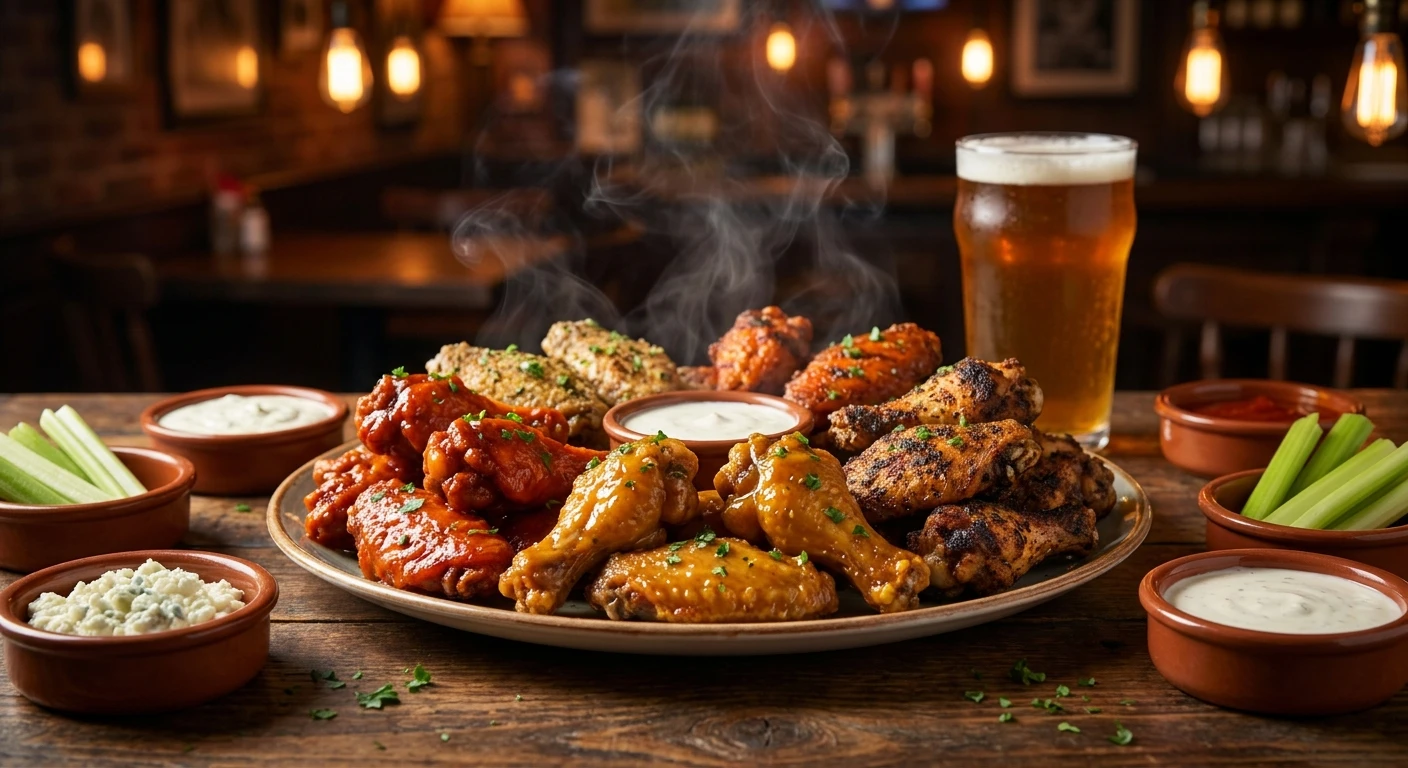
National Chicken Wing Day Canada: The Ultimate Strategy Guide
When July 29th rolls around, gearing up for National Chicken Wing Day Canada becomes serious business for food enthusiasts from coast to coast. Forget the basic backyard barbecue approach; this annual celebration demands a calculated game plan. Whether you are hitting up a legendary local pub in Halifax or a sprawling sports bar in Vancouver, this holiday honors a staple of modern culinary hospitality. The focus here goes way beyond just eating dinner. You are participating in a nationwide appreciation of local agriculture, culinary chemistry, and regional flavor profiles.
You might wonder why a single menu item commands its own dedicated 24-hour celebration. The answer lies in the sheer versatility of the dish and the massive cultural footprint it leaves across Canadian dining rooms. Grasping the history, the frying science, and the strategic ordering methods elevates your experience from a simple meal to a full-blown culinary event. Let’s break down exactly how you can maximize your time, budget, and flavor intake when this highly anticipated date arrives on the calendar.
Read also: Best crumbl cookies winnipeg Guide; Top Canada Day Sales: Your Ultimate Shopping Guide.
The True Value of the Wing Economy
What exactly is the value proposition of participating in a hyper-specific food holiday? It goes far beyond simply scoring discounted appetizers. First, it drives crucial revenue to independent pubs and local restaurants during the mid-summer season, a time when urban centers often see a dip in regular foot traffic. Second, it pushes kitchen crews toward culinary experimentation. Chefs frequently use this specific date to test out limited-edition sauces and dry rubs before adding them to permanent menus. Finally, heavy participation supports Canadian poultry farmers who work tirelessly to provide the high-quality, domestic ingredients necessary for that perfect, crispy bite.
Understanding the core flavor profiles that dominate the Canadian palate helps you order strategically. While cross-border influences are heavy, local tastes have evolved to champion distinctly northern profiles.
| Wing Style | Flavor Profile & Origin | Optimal Dip Pairing |
|---|---|---|
| Classic Buffalo | Vinegar, cayenne pepper, and emulsified butter (New York origins). | Chunky Blue Cheese |
| Honey Garlic | Sweet, sticky, and deeply savory. The undisputed Canadian pub staple. | None (Served naked) |
| Montreal Dry Rub | Savory, peppery steak spice blend with coarse salt and coriander. | Garlic Ranch |
| Maple Bacon Glaze | Smoky, sticky sweet, using authentic regional maple syrup. | Spicy Mayo |
To truly conquer the menus on this busy day, you need a solid tactical approach. Follow these three foundational rules:
- Map your route early: Top-tier independent pubs run out of fresh stock by early evening. Secure your table by mid-afternoon.
- Split your flavor profiles: Never commit your entire order to a single sauce. Balance heavy, creamy glazes with sharp, acidic dry rubs to avoid palate fatigue.
- Tip your servers generously: Kitchens and floor staff operate at maximum capacity on this date. Excellent etiquette ensures priority service during the rush.
Origins of the Wing Craze
To fully appreciate what sits in your basket, you need the backstory. The modern concept originated in Buffalo, New York, back in 1964 when Teressa Bellissimo famously deep-fried leftover parts and tossed them in hot sauce. Because Southern Ontario shares a border and massive cultural crossover with Western New York, the trend migrated north almost immediately. Fort Erie, Niagara Falls, and Toronto became the very first international testing grounds for this new bar snack. What started as a cheap way to utilize scrap meat quickly morphed into a cornerstone of the North American hospitality industry.
Evolution of Canadian Wing Culture
While the classic vinegar-heavy Buffalo sauce paved the way, Canadian kitchens refused to simply copy their neighbors. By the late 1980s and early 1990s, the culinary landscape shifted. Kitchens began introducing entirely new flavor categories tailored to local palates. The sweet and savory “Honey Garlic” emerged as a dominant force, becoming completely synonymous with Canadian bar food. Soon after, regional chefs began incorporating elements like peameal bacon crusts, Quebec maple syrup reductions, and complex dry rubs influenced by Montreal’s diverse culinary scene.
The Modern State of the Holiday
Today, the celebration operates on a massive scale. Millions of pounds of poultry are consumed nationwide on July 29th alone. Massive domestic chains run massive national campaigns, competing heavily for customer attention, while local independent pubs rely on closely guarded, proprietary sauce recipes to draw a loyal crowd. The day functions as a true equalizer in the restaurant industry; a neighborhood dive bar can easily outcompete a premium franchise if their frying technique and sauce consistency are superior.
The Science of the Perfect Fry
Achieving the perfect texture requires serious culinary chemistry. The magic relies heavily on the Maillard reaction—a chemical reaction between amino acids and reducing sugars that gives browned food its distinctive flavor. When dropped into oil at precisely 350°F to 375°F, the moisture on the surface rapidly evaporates, creating microscopic bubbles that form a rigid, crispy crust. Internally, the connective tissue, primarily collagen, must reach roughly 160°F to break down into silky gelatin. This dual requirement is why many elite kitchens utilize a double-fry method: a low-temperature fry to gently cook the meat and render out subcutaneous fat, followed by a high-temperature flash fry immediately before service to shatter-proof the skin.
Capsaicin and Flavor Chemistry
The heat you experience comes directly from capsaicin, an active component of chili peppers that physically binds to the TRPV1 receptors located on your tongue and throat. These receptors typically detect actual thermal heat, which is why spicy food literally feels hot. Because capsaicin is entirely oil-soluble and hydrophobic, drinking a glass of water simply spreads the painful oils around your mouth. Understanding this chemistry dictates how you should cool down.
- The Maillard reaction accelerates rapidly at 300°F, creating hundreds of complex flavor compounds in the skin.
- Capsaicinoids bind to pain receptors; consuming dairy introduces casein, a protein that actively strips capsaicin from those receptors.
- Moisture loss during frying can reach up to 30%, which concentrates the savory chicken flavors internally.
- Proper resting of the meat before saucing prevents the crust from immediately absorbing moisture and turning soggy.
Step 1: Research Local Deals
Do your homework before leaving the house. Restaurants begin advertising their specials days, sometimes weeks, in advance. Scour social media pages for both massive chains and your local neighborhood spots. Look for “buy one get one” offers, half-price platters, or exclusive one-day-only flavor drops. Compile a shortlist of three potential venues just in case your primary choice has an outrageous wait time.
Step 2: Assemble Your Wing Crew
This is not a solo mission. Dining with a group of three to five people allows you to order massive platters and sample a much wider variety of sauces and rubs without committing to a full pound of something you might not enjoy. Agree on a base heat tolerance for the group, but always order one “challenge” flavor to keep things exciting.
Step 3: Hydration and Prep
Sodium levels will be exceptionally high. Start hydrating early in the morning. Arriving at the pub dehydrated while consuming heavily salted, spicy foods guarantees a massive headache the following morning. Stick to water before the meal; carbonated beers take up valuable stomach real estate that should be reserved strictly for the main event.
Step 4: The Appetizer Strategy
Skip the heavy, bread-based appetizers. Nachos, garlic bread, and massive potato skins will fill you up prematurely. If you absolutely need a starter while the kitchen prepares your main order, opt for something light and acidic, like a simple house salad or some pickles. The acidity will actually prime your palate for the rich, fatty main course.
Step 5: Sauce Pacing and Heat Scaling
Never start with the hottest option on the menu. You will completely destroy your taste buds and ruin the subtle flavor notes of the subsequent dishes. Start with mild, savory dry rubs, progress through the sweet and sticky glazes, and finish your session with the heavy, vinegar-based hot sauces. Treat it like a wine tasting: light to heavy, mild to aggressive.
Step 6: The Bone-In vs. Boneless Debate Strategy
Purists will always demand traditional bone-in, but boneless options serve a specific tactical purpose. If you are wearing business casual attire or need to eat quickly during a lunch break, boneless provides a clean, fork-friendly alternative. However, for maximum flavor, the marrow and rendered fat near the bone of a traditional cut simply cannot be replicated by breast meat.
Step 7: Post-Wing Recovery
Once the meal concludes, immediately wash your hands with warm water and heavy soap—do not rely solely on those tiny packaged wet wipes. Avoid touching your eyes for several hours. Drink plenty of water before going to sleep, and perhaps keep some antacids nearby if you went heavy on the extreme heat levels.
Debunking Common Poultry Myths
Myth: Boneless wings are just actual wings that have had the bones carefully removed.
Reality: Boneless variants are simply sliced chunks of chicken breast meat, breaded and fried. They contain absolutely no meat from the actual wing of the bird.
Myth: Buffalo sauce is just a fancy name for pure, high-heat hot sauce.
Reality: Authentic Buffalo sauce is a careful emulsion of cayenne pepper sauce and melted butter. The butter cuts the harsh acidity and provides a silky, clinging texture.
Myth: You should avoid eating the “flats” because they have less meat.
Reality: While drumettes look meatier, flats actually offer a significantly higher skin-to-meat ratio, providing far more crunch and holding considerably more sauce per square inch.
Myth: Blue cheese is the only historically accurate and acceptable dipping sauce.
Reality: While blue cheese is the original standard, the evolution of complex dry rubs makes buttermilk ranch or garlic parmesan dips far better pairings for certain modern flavor profiles.
When is the exact date of this holiday?
The event falls firmly on July 29th every single year, regardless of the day of the week it lands on.
Do restaurants typically offer free items on this date?
Straight freebies are rare, but massive discounts, “buy one get one” promos, and heavily subsidized platter pricing are extremely common across the industry.
What is the most popular flavor coast to coast?
While Buffalo style holds steady, Honey Garlic consistently ranks as the most frequently ordered flavor profile nationwide.
Are drumettes actually better than flats?
It boils down entirely to preference. Drumettes offer a cleaner, one-handed eating experience with thicker meat, while flats provide superior crispiness.
Can you safely freeze leftover orders?
Yes, but you will completely lose the crispy texture. Reheating them in an air fryer helps, but they will never perfectly match the original restaurant quality.
Who invented the original Buffalo style?
Teressa Bellissimo is widely credited with inventing the dish at the Anchor Bar in Buffalo, New York, in 1964.
Is double frying totally necessary for crunch?
Absolutely. A single fry often leaves the skin chewy. The second high-heat plunge is what creates the definitive, glass-like crunch.
Does milk actually stop the spice burn?
Yes. Dairy contains casein, a protein that acts like a detergent, physically breaking the bonds between capsaicin oils and your pain receptors.
Taking part in National Chicken Wing Day Canada is the perfect excuse to gather your friends, skip the home cooking, and hit up your favorite local spot. With a solid understanding of the history, the frying science, and a strategic plan of attack, you are fully prepared to conquer the menus. Grab your wet wipes, map out your route, and make sure you order an extra side of blue cheese.