
The Long Road to a Gaza Ceasefire: What Is Happening Now?
Trying to keep up with everything happening in the Middle East feels like a full-time job lately. If you’ve been checking the news in Toronto, Vancouver, or anywhere else in Canada, you know the headlines change every hour. One day there’s a breakthrough in Cairo or Doha, and the next, everything seems to stall again. It’s exhausting to watch, but for the people living through it, it’s a matter of survival.
As we move through March 2026, the conversation around a Gaza ceasefire has shifted. It’s no longer just about a temporary pause; the pressure is on for something that actually sticks. But as anyone who follows geopolitics knows, “simple” isn’t a word that exists in this context. There are so many moving parts-hostage releases, humanitarian corridors, and the delicate ego of regional leaders.
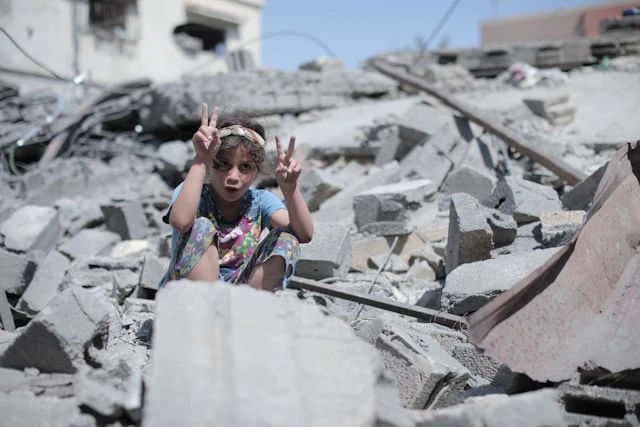
Honestly, the human cost has been staggering. We see the photos and read the stats, but it’s hard to wrap your head around the scale of it from our cozy spots in North America. Yet, the Canadian government and local communities are more vocal than ever. Whether it’s through aid contributions or diplomatic pressure, Canada is trying to play its part in a very crowded room of negotiators.
But let’s get into the weeds of what’s actually on the table right now. Because, let’s be real, the “official” statements often hide the real drama happening behind closed doors.
Who Is at the Table and What Do They Want?
Negotiations aren’t just a two-way street between Israel and Hamas. It’s more like a multi-lane highway with Qatar, Egypt, and the United States driving the big rigs. Each player has a specific set of goals that don’t always align.
Qatar has been the primary bridge, using its unique position to pass messages back and forth. Egypt is looking at its own border security and the massive humanitarian crisis knocking at its door. And the U.S.? They’re trying to prevent a total regional blowout while keeping their domestic voters happy-which is a tall order these days.
The current 2026 framework usually revolves around a three-phase plan. You’ve probably heard this before, but the devil is in the timing.
* **Phase One:** A six-week pause, release of vulnerable hostages, and a massive surge of aid trucks.
* **Phase Two:** A permanent end to hostilities and the release of remaining soldiers.
* **Phase Three:** The “Day After” plan-reconstruction and who actually runs the place.
The sticking point is almost always Phase Two. One side wants a guarantee the war is over, while the other wants the right to keep going until their objectives are met. It’s a classic deadlock that keeps negotiators up all night drinking way too much coffee.
The Humanitarian Crisis: More Than Just Numbers
We talk about “aid units” and “logistical corridors,” but we’re talking about food, water, and medicine. The situation in Gaza has reached a point where international organizations are basically screaming for a solution. In Canada, we’ve seen a lot of debate about funding for UNRWA and other agencies. It’s a touchy subject, but the bottom line is that people are hungry.
The 2026 reality is that even if a ceasefire is signed tomorrow, the cleanup will take decades. We’re talking about rebuilding entire cities from scratch.
### Current Aid Logistics Overview
| Route Type | Status | Primary Challenges |
| :— | :— | :— |
| Kerem Shalom | Operational | Security checks and slow processing |
| Rafah Crossing | Restricted | Political tension between Egypt and Israel |
| Maritime Corridor | Experimental | Weather dependency and pier stability |
| Air Drops | Active | High cost and limited volume |
It’s a bit of a mess, to put it mildly. Using ships to bring in food sounded great on paper, but the logistics of offloading in a war zone are a nightmare. Most experts agree that land routes are the only way to move the volume needed to stop a famine.
Regional Stability: Is the Whole Neighborhood on Fire?
One of the biggest fears in 2026 is “spillover.” We’ve seen it with the Houthis in the Red Sea and the back-and-forth on the Lebanon border. If Gaza doesn’t calm down, the risk of a wider war involving Hezbollah or even direct conflict with Iran stays high.
For us in Canada, this matters because of global trade. If the Red Sea is blocked, your Amazon package gets more expensive and gas prices at the Petro-Canada down the street start creeping up. It’s all connected.
Hezbollah is the “wild card” here. They’ve tied their actions directly to what happens in Gaza. If a ceasefire is reached, the northern border of Israel might finally see some peace, allowing thousands of displaced people to go home. If not? Well, let’s just say the military buildup there is enough to make anyone nervous.
Key Factors Influencing Regional Peace
1. **The Iran Connection:** How much control does Tehran actually want to exert over its proxies right now?
2. **Internal Israeli Politics:** The coalition government in Israel is under massive pressure from both the right and the families of hostages.
3. **The Saudi Normalization Carrot:** There’s still a massive deal on the table for Saudi Arabia to recognize Israel, but it’s contingent on a path to a Palestinian state.
4. **U.S. Election Cycles:** Even in 2026, the shadow of American politics looms over every meeting in the Middle East.
The Canadian Perspective: Why We Care
You might wonder why a coffee shop in Halifax or a tech office in Waterloo is buzzing about this. Canada has one of the most diverse populations in the world. We have large Jewish and Palestinian diasporas, and when things get heated over there, it gets tense here too.
The Canadian government has been walking a tightrope. They want to support Israel’s security but are also being pushed by citizens to take a harder line on the humanitarian situation. It’s a messy balance of “quiet diplomacy” and public statements that often satisfy nobody.
But honestly, the biggest impact is on the community level. We see the protests, the charity drives, and the heated social media debates. It’s a reminder that global issues are local issues.
Reconstruction: Who Picks Up the Pieces?
Let’s say the ceasefire actually happens. What then? You can’t just stop the bombs and expect life to go back to normal. The 2026 estimates for Gaza’s reconstruction are in the tens of billions of dollars.
Who pays for it? The Gulf states (UAE, Qatar, Saudi Arabia) have the cash, but they aren’t going to write a check if they think the buildings will just get knocked down again in two years. They want a “political horizon”-a fancy way of saying a real plan for a Palestinian state.
### Reconstruction Cost Estimates by Sector
| Sector | Estimated Cost (USD) | Priority Level |
| :— | :— | :— |
| Housing | $15 Billion | Critical |
| Healthcare | $4 Billion | High |
| Energy/Water | $3.5 Billion | High |
| Education | $2 Billion | Medium |
It’s a mountain of work. And that doesn’t even touch the psychological trauma. A whole generation of kids in Gaza hasn’t known a day of peace. That’s not something you can fix with a new apartment building.
Is 2026 the Turning Point?
We’ve been here before. Many times. Every few months, there’s a “final” proposal that everyone hopes will work. The difference in 2026 is the sheer exhaustion of everyone involved. There’s a sense that the current path is unsustainable for all sides.
But hope is a tricky thing. It’s easy to get cynical when you see the same patterns repeating. Yet, the fact that people are still talking-that the U.S., Egypt, and Qatar are still flying back and forth-means there’s still a window. It’s a small, dusty window, but it’s open.
So, what should we look for in the coming weeks? Watch the hostage swap numbers. If those start to move, it’s a sign that the trust (or at least the desperation) is reaching a tipping point. And keep an eye on the Lebanon border. If that stays quiet, it’s a good sign for the whole region.
Frequently Asked Questions
Why hasn’t a ceasefire happened yet?
Basically, both sides have “red lines” they won’t cross. One side wants the war to end for good before giving up hostages, while the other wants to keep the option to fight until Hamas is gone. It’s a total stalemate on the fine print.
What is Canada’s role in all of this?
Canada mostly does “middle-power” diplomacy. We send a lot of humanitarian aid and back the big peace plans led by the U.S. and Arab nations. We aren’t the main negotiators, but our voice matters in the UN and G7.
How do these negotiations affect gas prices?
If the conflict spreads to places like the Red Sea or Iran, oil shipping gets risky. Higher risk means higher insurance for ships, which eventually hits your wallet at the pump in Canada.
Who are the main mediators?
Qatar, Egypt, and the United States are the big three. They do the heavy lifting, literally flying between capitals to pass papers because the two main sides won’t talk to each other directly.
What is the “Day After” plan?
It’s the plan for who governs Gaza once the fighting stops. It’s super controversial because nobody can agree if it should be the Palestinian Authority, an international force, or something else entirely.
Is there enough food getting into Gaza?
Right now, no. Most international groups say the aid is way below what’s needed. They’re trying sea routes and air drops, but they’re just not as effective as big truck convoys.
Will this lead to a two-state solution?
That’s the million-dollar question. Most world leaders say it’s the only way to get long-term peace, but the actual path to getting there is blocked by a lot of bad blood and political obstacles.
Wrapping It All Up
The situation in Gaza and the quest for regional stability is probably the most complex puzzle in modern politics. There are no easy answers, and anyone who tells you otherwise is probably selling something. In 2026, we’re seeing a mix of extreme tragedy and a very slow, painful effort to find a way out.
For those of us watching from afar, it’s easy to feel helpless. But staying informed-beyond just the 15-second clips on social media-is a start. The pressure for a ceasefire isn’t just coming from politicians; it’s coming from a global community that is tired of seeing the cycle of violence continue.
Will this current round of talks be the one? We can only hope. But even if it is, the work of building a real, lasting peace is just beginning. It’s going to take more than a signed piece of paper to heal the wounds of the last few years. It’s going to take a level of political courage that we haven’t seen in a long time.
Stay tuned, keep asking questions, and maybe, just maybe, we’ll see some better news on the horizon soon.